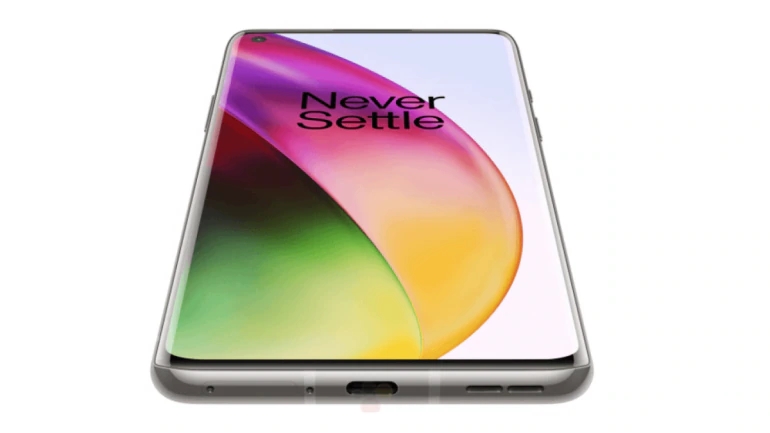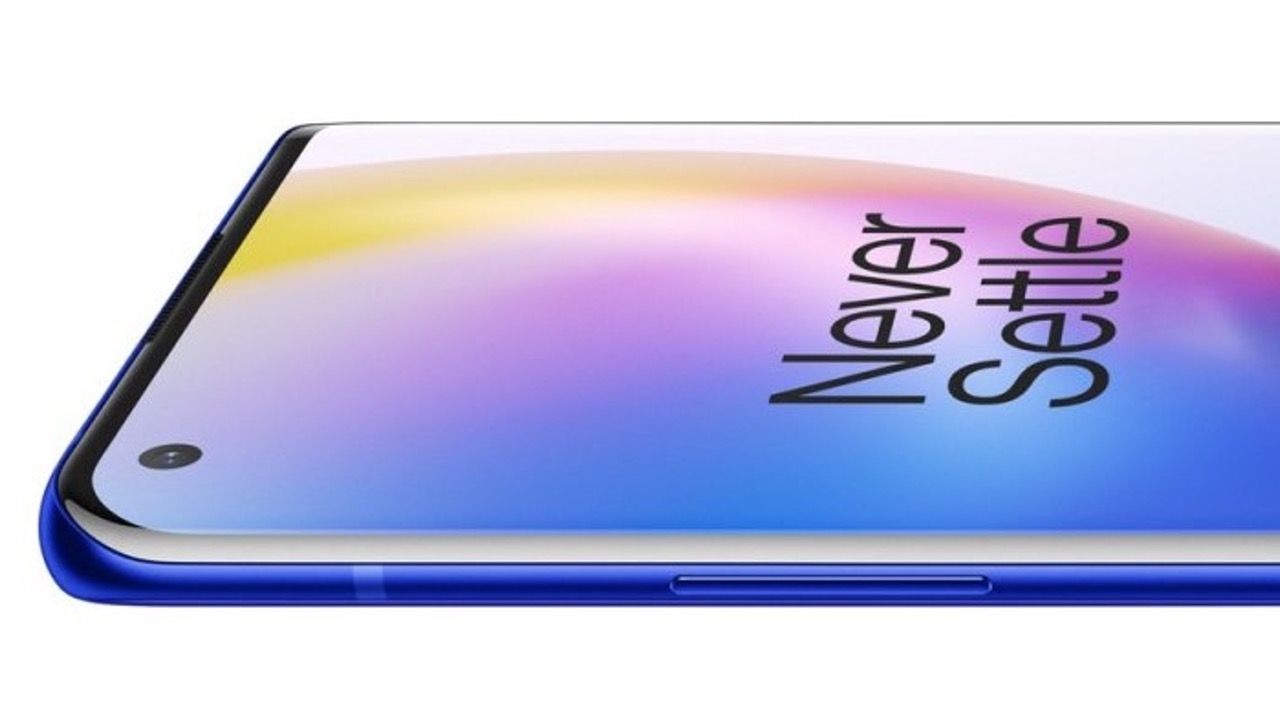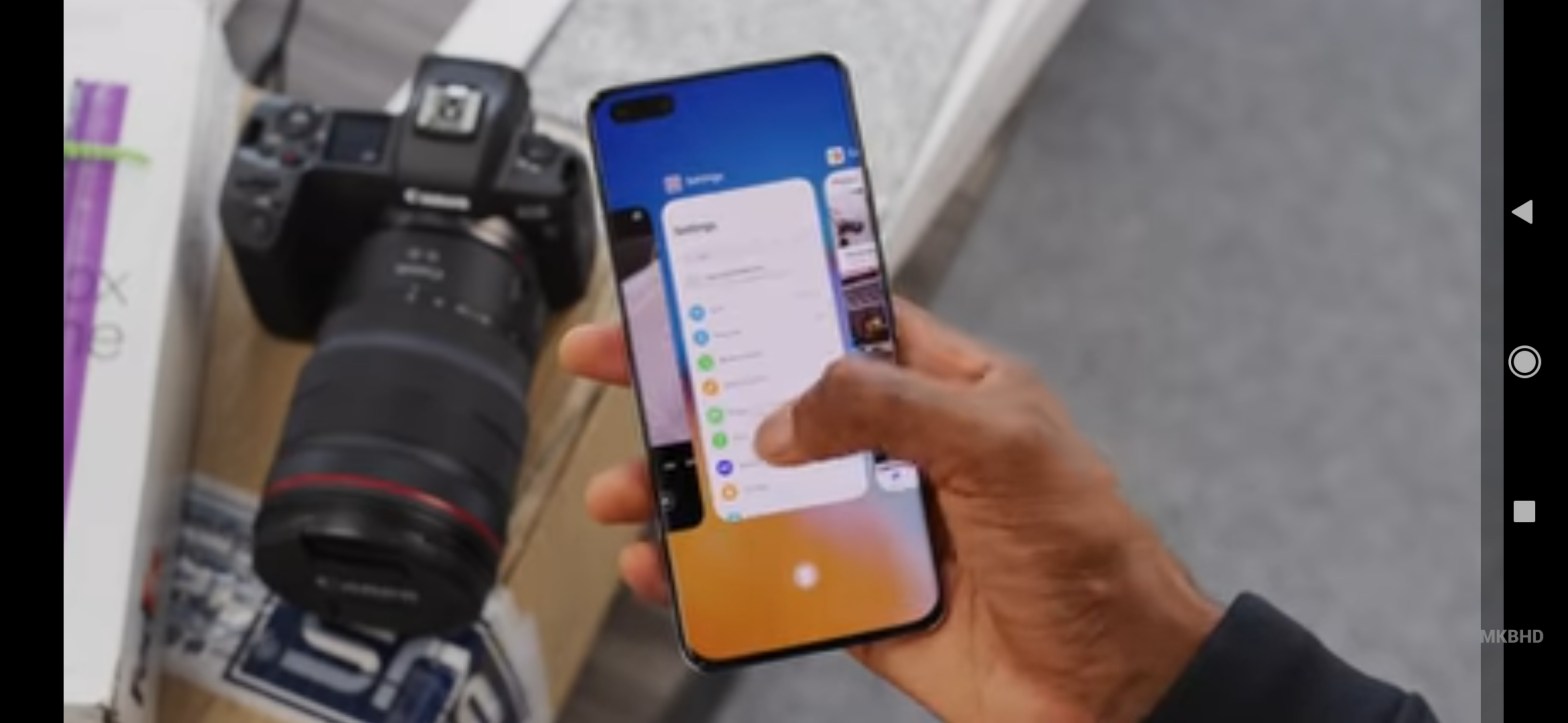
OnePlus introduced its flagship OnePlus 8 and OnePlus 8 Pro flagship smartphones at its online event earlier this week.
HIGHLIGHTS
OnePlus 8 Indian prices: OnePlus 8 starts at Rs 41,999, OnePlus 8 Pro starts at Rs 54,999
OnePlus Bullets Wireless Z priced at Rs 1,999
OnePlus yet to reveal availability and sale dates, but could happen post lockdown
Watch One Plus First Hands On
OnePlus has revealed the Indian prices of its latest OnePlus 8 series phones. The OnePlus 8 starts at Rs 41,999 in India while the OnePlus 8 Pro will retail starting at Rs 54,999. The company revealed the information about the prices to its exclusive Red Cable Club members just a short while back.
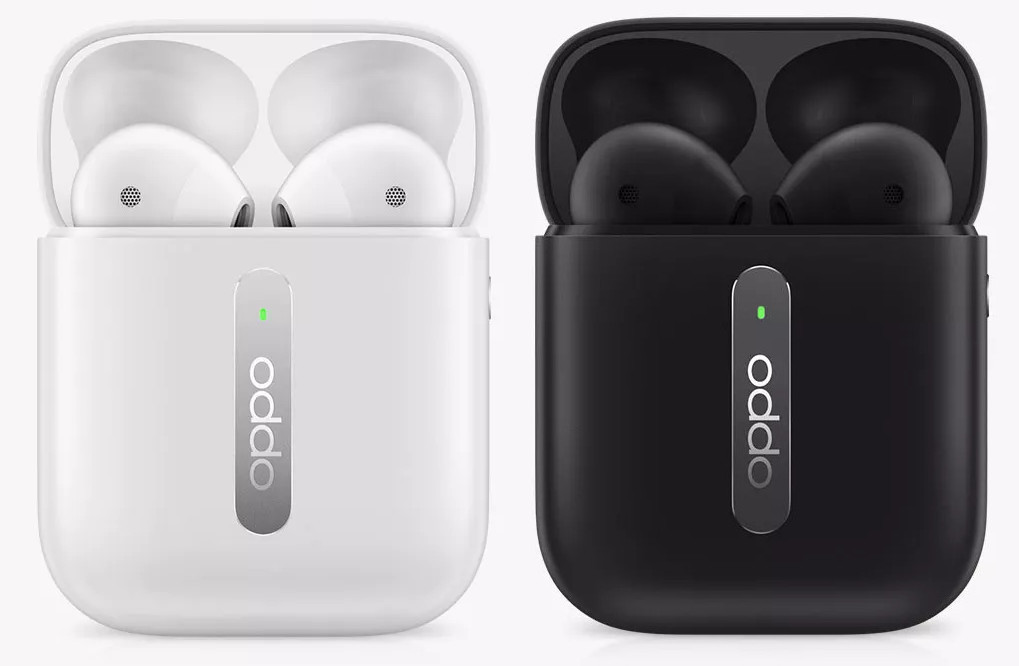
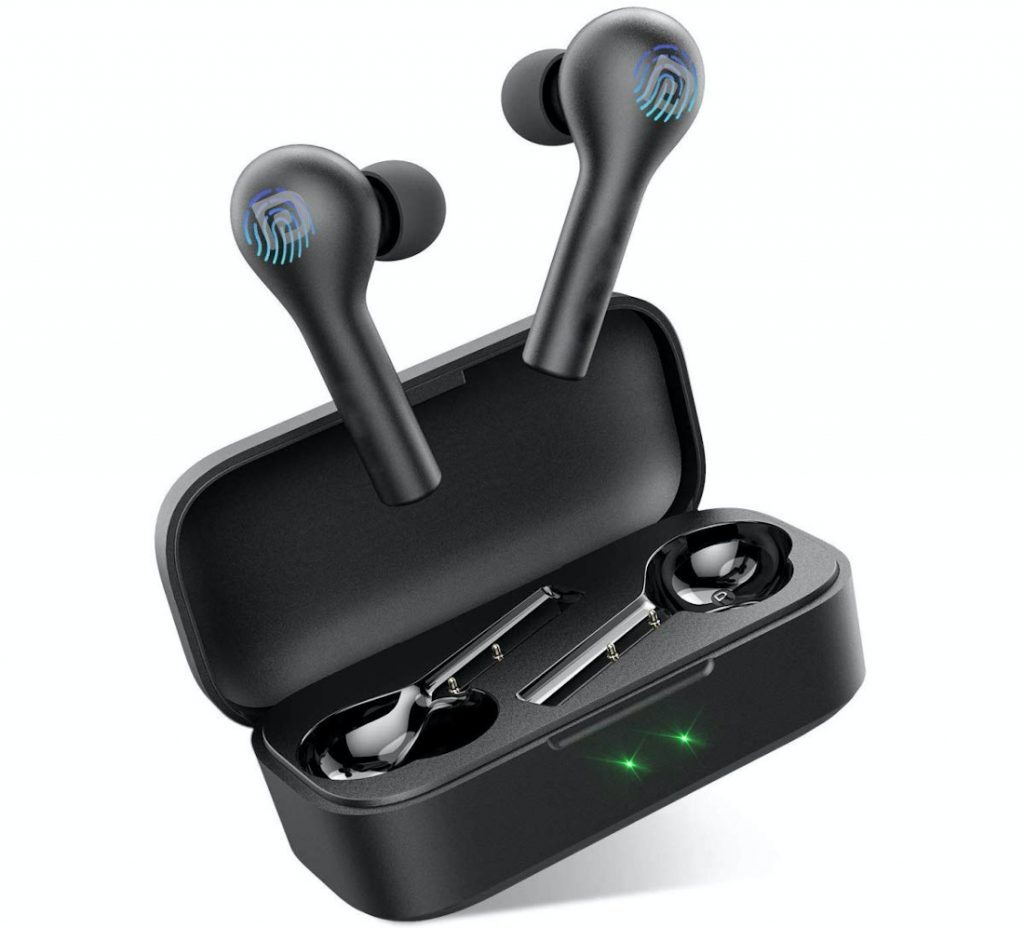
OnePlus’ new Bullets Wireless Z will retail at Rs 1,999 in India and will be available in four colours– Black, Blue Mint and Oat. It can be noted here that the new wireless headphones by OnePlus are priced very aggressively and at a much affordable price-point than the previous two iterations of the Bullets Wireless.
ONEPLUS 8 AND ONEPLUS 8 PRO INDIAN PRICING AND AVAILABILITY
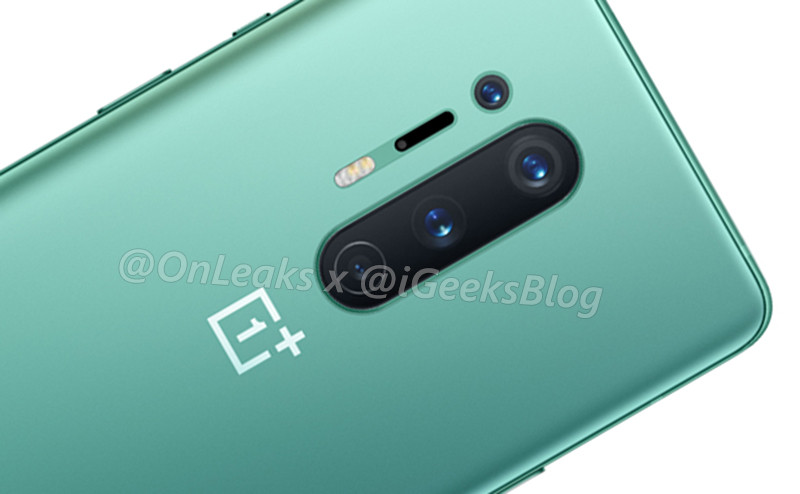
OnePlus 8 series features the latest Qualcomm Snapdragon 865 chip with 5G support and has AMOLED screen with upto 120fps refresh rate, multiple-camera setup and OxygenOS to boot. It is available in three colours to choose from– Onyx Black, Glacial Green and Interstellar Glow.
OnePlus 8 is priced starting at Rs 41,999 for the Glacial Green variant with 6GB RAM and 128GB storage, Rs 44,999 for the Onyx Black and Glacial Green models with 8GB RAM and 128GB storage and Rs 49,999 for the maxed-out variant with 12GB RAM and 256GB storage. This variant also has an Interstellar Glow colour option in addition to the other two.
OnePlus 8 Pro starts at Rs 54,999 for the base variant with 8GB RAM and 128GB storage and Rs 59,999 for the top-end model with 12GB RAM and 256GB storage. The maxed-out variant is also available in a third, Ultramarine Blue colour.
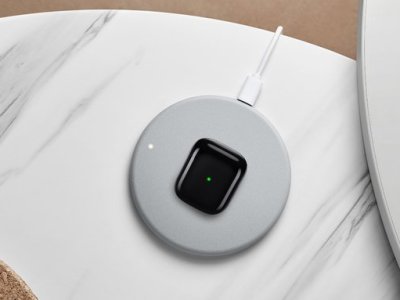
However, the company hasn’t revealed the price of its Warp Charge 30 wireless charging dock yet. Additionally, no information has been shared regarding when the products will go on their first sale in India. With the current restrictions in place due to the Coronavirus outbreak, the government hasn’t allowed e-commerce companies to deliver non-essential goods such as mobile phones and laptops. Therefore, it could take a while for the OnePlus 8 phones to go on sale but the current lockdown lifts only on May 3, so we’ll have to wait to find out the exact dates of sale.
ONEPLUS 8 AND ONEPLUS 8 HARDWARE SPECS AND FEATURES
The OnePlus 8 and OnePlus 8 Pro were released via an online event on April 16. While the OnePlus 8 only got some incremental upgrades, the OnePlus 8 Pro is the company’s first true flagship smartphone. Both smartphones are powered by the new Snapdragon 865 SoC and are 5G-capable. The vanilla OnePlus 8 gets up to 12GB LPDDR4X RAM while the OnePlus 8 Pro gets the newer LPDRR5 RAM (up to 12GB). Both smartphones come with up to 256GB UFS 3.0 storage.
The OnePlus 8 rocks a 6.5-inch FHD+ 90Hz AMOLED display while the same on the OnePlus 8 Pro is a 120Hz QHD+ AMOLED display measuring 6.7-inches. Both are HDR10+ certified and rock in-display fingerprint sensors and punch-hole selfie cameras.
There’s a triple camera setup at the back of the OnePlus 8 including a 48MP Sony IMX586 sensor, a 16MP ultrawide lens and a 2MP macro. The OnePlus 8 Pro gets a quad-camera setup with a 48MP Sony IMX689 primary sensor, another 48MP Sony IMX586 sensor with ultawide lens, an 8MP telephoto lens with 3x hybrid zoom and a colour filter lens.
The OnePlus 8 is powered by a 4,300mAh battery while the OnePlus 8 Pro is powered by a 4510mAh battery. Both smartphones get charged via a 30W Warp Charge 30T charger. Only the OnePlus 8 Pro goes a step further and boasts of 30W wireless charging support as well. The OnePlus 8 Pro is also IP68-rated water and dust resistant.
One Plus 8 Series Pricing
OnePlus 8 (6GB + 128GB) Glacial Green – Rs. 41,999

OnePlus 8 (8GB + 128GB) Onyx Black and Glacial Green – Rs. 44,999
OnePlus 8 (12GB + 256GB) Onyx Black, Glacial Green and Interstellar Glow – Rs. 49,999
OnePlus 8 Pro (8GB + 128GB) Onyx Black and Glacial Green – Rs. 54,999
OnePlus 8 Pro (12GB + 256GB) Onyx Black, Glacial Green and Ultramarine Blue – Rs. 59,999
One Plus 8 Review and First Hands On
One Plus 8 Availability
The OnePlus 8 and OnePlus 8 Pro will be available from Amazon,OnePlus India site and offline channels from May. The base OnePlus 8 version is exclusive to Amazon.
Realme today confirmed that Narzo 10 and Narzo 10A will launch in India on April 21st in an online launch event after it got postponed last month.
Update (Apr 20)
Realme just announced that it has now postponed the online launch of Narzo 10 series in India that was scheduled for April 21st to a later date.
We have noticed the update shared by the Ministry of Home Affairs (MHA), Government of India. They have mentioned about the supply of non-essential goods by e-Commerce companies to remain prohibited during the lockdown. Realme was planning to start online sales of its smartphones from April 20 and launch its Narzo series on April 21 through e-commerce platforms. But bearing in mind the current order from MHA, we are evaluating the situation and decision about the launch of the much-awaited Narzo series and online sales of our other smartphones will be made by tomorrow. On principle aligned, people’s health comes first at realme, and we will follow the Government directives issued in best interests of the people.
Earlier: Last month, Realme had confirmed that the company will be hosting a launch event on 26th March to launch its new smartphone series ‘Narzo‘ in the Indian market, comprising of two devices — Narzo 10 and Narzo 10A.
However, just days before the official launch, the event was cancelled by the company as the Indian government imposed nationwide lockdown to curb the spread of coronavirus in the country. The lockdown, which was supposed on end on 14th April, has now been expanded until 3rd May.
Now, it seems that Realme has run out of patience and has scheduled a launch event on 21st April in India at 12:30 PM where the company will launch the upcoming Realme Narzo 10 and Realme Narzo 10A smartphones. The online event will be live streamed by the company on YouTube and Facebook.
Reports indicate that the Narzo 10 is a rebranded version of the Realme 6i that debuted in Myanmar recently, it will be launching in India as the country’s first Helio G80 chipset driven phone.
As per the rumors, the Narzo 10 series will feature 6.5-inch HD+ screen resolution with support for 20:9 aspect ratio and will come with waterdrop notch. The Realme Narzo 10 is said to pack 4GB of RAM, 128GB of native storage, 16-megapixel front camera and 48-megapixel quad camera setup.
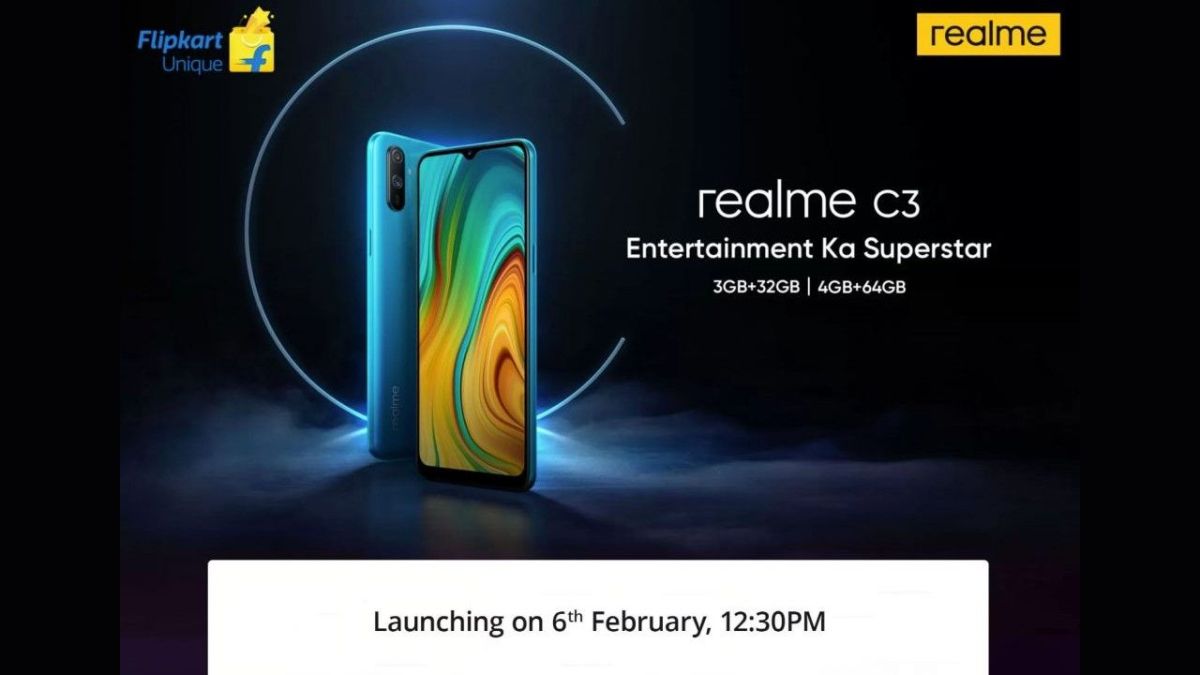
On the other hand, the Narzo 10A is said to be a rebranded edition of the Realme C3 phone that debuted in markets like Indonesia and Thailand recently. It will be powered by MediaTek Helio G70 chipset, 4GB of RAM, 64GB of storage, 5-megapixel selfie camera and 12-megapixel triple rear cameras.
The realme Narzo 10 is expected to come in White Milk and Green Tea colors and the Narzo 10A is expected to be available in Frozen Blue and Blazing Red colors.
However, to know for sure about the specifications and features of these upcoming phones, as well as their pricing and availability details, we’ll have to wait for a few more days for the official launch event to take place.
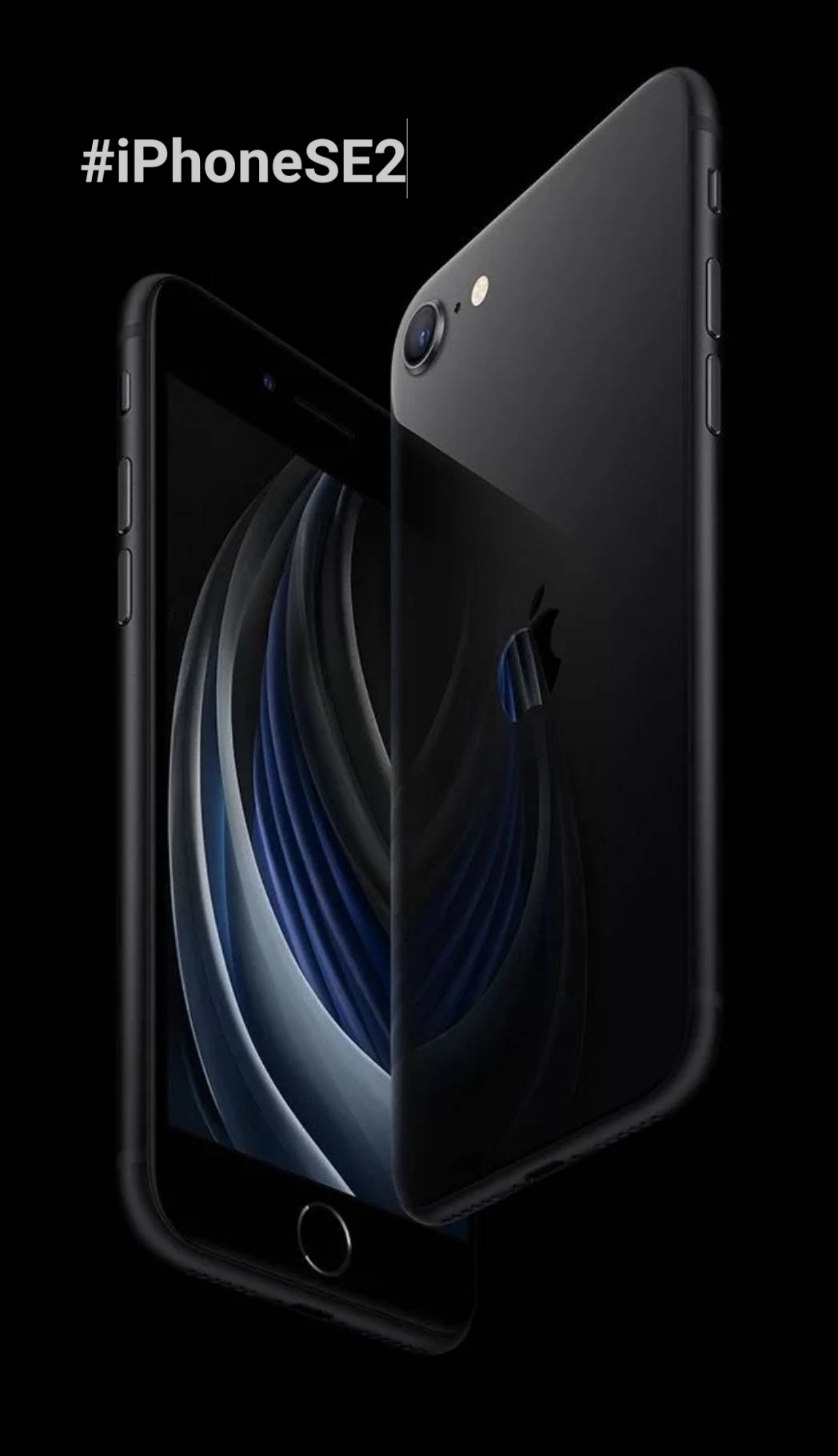
Apple just announced the new iPhone SE, the company’s latest smaller iPhone, as rumored, and it is the successor of iPhone SE that was introduced back in 2016.
It is powered by A13 Bionic chip that powers by iPhone 11, comes with 4.7-inch HD Retain screen with Haptic Touch and still retains the Touch ID fingerprint sensor below the display.
It has a glass and aluminum design, features single 12MP camera with 4k video recording and a 7MP front camera with 1080p HD video recording. The company doesn’t reveal the battery capacity, but says that it will be same as iPhone 8.
Apple iPhone SE 2020 specifications
4.7-inch (1334 x 750 pixels) IPS 326 ppi display, 1400:1 contrast ratio, 625 cd/m2 max brightness
12MP wide-angle (f/1.8) camera, optical image stabilization, True Tone flash, 4K video recording at 60 fps, Slo‑mo 1080p at 240 fps
7MP front camera with f/2.2 aperture, 1080p video recording
TouchID Fingerprint sensor
Built‑in stereo speaker
Dimensions: 138.4x 67.3×7.3mm; Weight:148g
Gigabit-class 4G LTE up to 1.6Gbps, 802.11ax Wi‑Fi 6 with 2×2 MIMO, Bluetooth 5.0, NFC with reader mode, GPS with GLONASS
Built-in rechargeable lithium-ion battery with Qi wireless charging, 18W fast charging (5w charger in the box)
The Apple iPhone SE 2020 comes in Black, White and PRODUCT(RED) colors and starts at Rs. 42,500 for the 64GB version in India compared to $399 (Rs. 30,555 approx.) in the US where it will be available from April 24th. 128GB version costs $449 (Rs. 34,390 approx.) and the 256GB version is priced at $499 (Rs. 38,220 approx.). It will be available through Apple Authorized Resellers soon in India. This should replace the iPhone 8 that got a price hike recently.
OnePlus has officially launched the OnePlus 8 and OnePlus 8 Pro
Both smartphones are powered by the latest Snapdragon 865 and are 5G-ready.
Both the OnePlus 8 and OnePlus 8 Pro will be available in India.
OnePlus announced the OnePlus 8 series, the company’s latest flagship smartphone and the successor of last year’s OnePlus 7T in an online launch event, as it had promised.
The OnePlus 8 and OnePlus 8 Pro have gone official. Owing to the COVID-19 crisis engulfing the world, OnePlus didn’t host a physical event. Instead, the company unveiled the OnePlus 8 series via a streamed session. As expected, there are two new smartphones — The OnePlus 8 and the OnePlus 8 Pro and both of them will be coming to India.
Both smartphones are powered by the flagship Snapdragon 865 SoC, sport high refresh rate displays and multi-camera setups. Interestingly enough, all the LEAKED that were doing the rounds are true. OnePlus itself had kept fans on a drip-feed of information for the past few days and on Tuesday evening, it let the floodgates open. Let’s check out each smartphone individually.
Watch OnePlus8 Event
ONEPLUS 8 SPECIFICATIONS AND FEATURES
Just like last year, the OnePlus 8 is the default option for most while the OnePlus 8 Pro is the premium flagship. Naturally, there are some features that are not present in the OnePlus 8, but overall the improvements come out more as incremental rather than ground-breaking.
The OnePlus 8 features a 6.55-inch FHD+ Super AMOLED display, the same size as the OnePlus 7T. Only this time, instead of a waterdrop notch, there’s a tiny punch-hole camera in the top left corner of the panel. The screen offers a 90Hz refresh rate and boasts of HDR10+ certification and 20:9 aspect ratio.
It’s powered by the Snapdragon 865 and because of Qualcomm’s decision to include a 5G modem, the OnePlus 8 is also 5G-ready. Of course, that won’t do you much good here in India till 5G networks debut. OnePlus also increased the RAM on the OnePlus 8 with a 12GB variant along with another 8GB one. Both are LPDDR4X. The newer LPDDR5 RAM module went to the Pro model. Furthermore, it comes with the 2-Lane USB 3.0 storage with 128GB and 256GB variants. There’s also a larger 4,300mAh battery this time that tops up using a Warp Charge 30T charger that’s included in the box.
Unlike the OnePlus 8 Pro that packs a quad-camera setup, the OnePlus 8 sticks to a triple camera setup. The primary camera is a 48MP sensor but it’s a new Sony IMX586 sensor with 0.8um pixels and 4-in-1 pixel binning. That’s combined with a 6p lens with f/1.75 aperture. The primary camera features OIS and EIS. The second camera is a 16MP ultrawide camera with 116-degree field-of-view. The lens has an aperture of f/2.2 and offers PDAF. Lastly, there’s a 2MP macro lens with f/2.4 aperture for taking close-up shots. There is no zoom lens in the setup but the camera app offers 2X digital zoom from the primary lens. The OnePlus 8 can take 4K videos at 60 fps and 240 fps slo-mo videos at 1080p resolution. There’s also the nightscape mode that the company claimed to have been improved and can capture far more details in low-light than before. Lastly, there’s a new pet mode that tracks focus of your pet (specifically cats and dogs) to capture a sharp shot.
The OnePlus 8 weighs 180grams and measures just 8mm in width making it quite slim to hold. The phone is available in two finishes and three colours — Onyx Black (glossy finish), Interstellar Glow (glossy finish) and Glacial Green (matte finish).
Like what OnePlus is offering? Wait till you read about the OnePlus 8 Pro.
The Pro variant has become the culmination of the best OnePlus has to offer and the OnePlus 8 Pro is no different. It starts off with a QHD+ 6.78-inch AMOLED panel that goes for a punch-hole selfie camera instead of a pop-up module. More than that OnePlus pushed the refresh rate to 120Hz on the OnePlus 8 Pro and added the MEMC chip that it first introduced in the OnePlus TV last year. The MEMC chip helps in converting videos from 24 FPS to 120 FPS making it good for watching sports, but not movies and TV shows since they will look quite artificial with motion smoothing.
Under the hood, the OnePlus 8 Pro also opts for the Snapdragon 865 SoC and is 5G-ready. Furthermore, it opts for the latest RAM standard with up to 12GB LPDDR5 RAM and 256GB UFS 3.0 storage. There’s another 8GB RAM variant with 128GB storage.
The OnePlus 8 Pro also got a battery bump with a 4510mAh battery, but more interestingly this becomes the first OnePlus smartphone to feature wireless charging with the wireless charger sold separately. Both wired and wireless charging happens at 30W (a feature that’s a first here in India) and you can also reverse charge (again both wired and wirelessly) at the same speed. OnePlus claims a 23-minute charge delivers 50% power.
Finally, let’s get into the camera details. The OnePlus 8 Pro rocks a quad-camera setup like most other flagships these days. The primary sensor is a Sony IMX689 48MP sensor with 7P lens and f/1.78 aperture. There’s both OIS and EIS in the primary sensor. Then there’s an 8MP f/2.4 telephoto camera that OnePlus claims can deliver 3X hybrid zoom. Interestingly, OnePlus used another 48MP camera with the ultrawide lens. It offers a field of view of 119.7-degrees and comes with an f/2.4 aperture. The last sensor is a 5MP colour filter sensor with f/2.4 aperture.
Together, the camera setup can capture HDR videos, offer audio zoom, macro shots, smart pet capture and more.
Watch One Plus 8/8 Pro First Hands On
ONEPLUS 8, ONEPLUS 8 PRO PRICE AND AVAILABILITY
Both the OnePlus 8 and OnePlus 8 Pro will be available globally, including India. Globally, the OnePlus 8 with 8GB RAM+128GB storage is priced at $699 (roughly Rs 53,000) while the 12GB RAM+256GB storage variant is priced at $799 (roughly Rs 60,720). The OnePlus 8 Pro, on the other hand, is priced starting $899 (roughly Rs 68,320) for the 8GB RAM +128GB storage variant while the 12GB RAM + 256GB storage variant goes up to a whopping $999 (roughly Rs 75,920). The OnePlus 8 Pro Wireless Charger is priced at $69.95 (roughly Rs 5,315). The phones will go on sale in the US and UK from April 29 and April 21 respectively. There’s no word on India pricing or availability so far.
OnePlus is all set to launch the OnePlus 8, 8 Pro smartphones tomorrow at an online event.
We will know the full details of the smartphones tomorrow when the device launches during an online event.
However that doesn’t stop the leaks and renders from surfacing as now the images of the OnePlus 8 Series Pop Up Box, its contents, and André Limited Edition cases have surfaced.
OnePlus conducts Pop Up events every year and due to the ongoing COVID-19 crisis, the company is hosting an online pop-up event right after the online launch and users will be able to purchase the smartphones. OnePlus will deliver the “Special Pop Up Box” to buyers on April 15th, 2020.
Based on the leaked image, the box will contain an OnePlus 8 Pro smartphone, Cyan colored Sandstone Bumper Case, Karbon Bumper Case Transparent Case, and an OnePlus Bullets Wireless Z earphones. The renders of the Bullets Wireless Z surfaced recently and now the name is confirmed through this leaked image.
OnePlus has also partnered with artist Mr. André for the OnePlus 8 Series and now the OnePlus x André Limited Edition cases have also surfaced, revealing the colors and the pattern.
The OnePlus 8 series online launch event will be hosted at 8:30 pm IST (11 AM EDT), 14 April, via live stream on the OnePlus official website and YouTube.
The OnePlus 8 series launches on Tuesday, April 14. There is practically nothing we do not know about the two phones already with respect to their specifications.
As the date of OnePlus 8 nears, fresh leaks keep revealing more info. The latest are pictures of the official cases for the OnePlus 8 Pro in addition to the retail box it will ship in.
OnePlus will announce four types of cases for the OnePlus 8 Pro according to photos posted online.
The first is a Sandstone Case which will be available in Black, Smoky Purple, and Cyan. There is also the transparent bumper case which should be included inside the box. There is also a nylon case and a Karbon Bumper case.
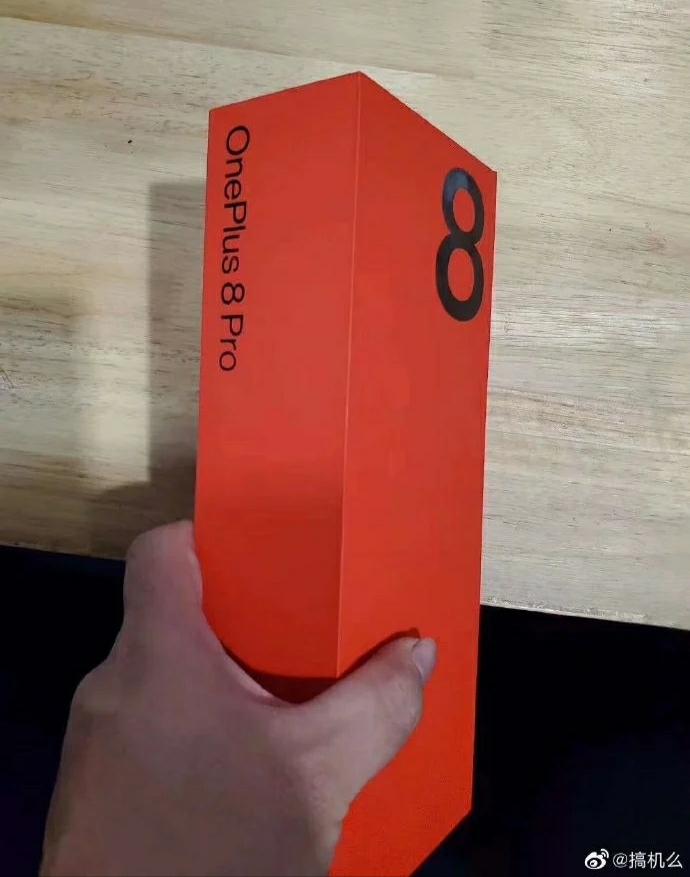
For the retail box, OnePlus is going with the same elongated design it used for the OnePlus 7T series. The box is red and the name of the phone is written in black font on the side. There is also a large figure “8” written on top of the box.
OnePlus 8 Pro Specifications
The OnePlus 8 Pro will pack a 6.78-inch QHD+ display with a 120Hz refresh rate. It will be powered by Qualcomm’s Snapdragon 865 processor with up to 12GB of RAM and 256GB of storage. It will have 48MP quad rear cameras and a 16MP selfie camera.
The flagship will also have a 4510mAh battery capacity with support for Warp Charge 30 (30W) and Warp Charge 30 Wireless (30W).
WHERE TO WATCH ONEPLUS EVENT LIVE ?
The OnePlus 8 series online launch event will be hosted at 8:30 pm IST (11 AM EDT), 14 April, via live stream on the OnePlus official website and YouTube.
OnePlus has announced that its upcoming OnePlus 8 series will go on sale in China from April 17.
HIGHLIGHTS
OnePlus 8 series to go on sale in China from April 17
OnePlus 8 series launches globally on April 14
OnePlus to unveil new Bullets Wireless earphones and Warp Charge 30 wireless charging dock
The new phones will launch on April 16 in China while the global launch is scheduled for April 14. OnePlus has also released some titbits about the design of the upcoming phones as we near the launch date.
Due to the ongoing Coronavirus outbreak and the ensuing health crisis, smartphone manufactures have either postponed launch events or have transitioned to virtual gatherings. Since India is also currently under a lockdown that is expected to lift the same day as the OnePlus 8 launch, the Indian government has hinted that they’re considering the viability of an extension to the lockdown.
Keeping in mind that smartphone manufacturers in India like Xiaomi and Realme have put a restriction on further production of smartphones, it’s currently not known when the OnePlus 8 phones will make it to the country.
Additionally, most of the specifications including the pricing have been leaked in the past few days with OnePlus even revealing some of the key features to keep the hype train going.
ONEPLUS 8 SERIES LEAKED SPECIFICATIONS
OnePlus 8 features 6.5-inch Full HD+ (2400 x 1800 pixels) resolution display that uses an AMOLED panel with a punch-hole cutout. The screen has a 90Hz refresh rate and features an in-display fingerprint sensor. The Pro variant has a slightly bigger 6.7-inch QHD+(3120 x 1440 pixels) resolution AMOLED screen with a faster 120Hz refresh rate.
Both the phones are powered by Qualcomm Snapdragon 865 chip with 8GB/12GB RAM and 128GB/256GB storage options.
The regular OnePlus 8 is said to have a triple camera setup on the back, while the Pro variant seems to have four cameras on the rear. According to leaks, the OnePlus 8 has 48MP primary camera with an 8MP ultra-wide-angle lens and a 2MP macro lens. The Pro version has a primary 48MP lens and a secondary 48MP ultra-wide-angle lens. This is accompanied by an 8MP telephoto lens and a 5Mp depth sensor.
OnePlus 8 and 8 Pro have a 16MP selfie camera on the front tucked away in the notch cutout.
The OnePlus 8 has a 4,300mAh battery with support for 30W fast charging while the OnePlus 8 Pro has a bigger 4,500mAh battery that also supports 30W fast wireless charging.
WHERE TO WATCH ONEPLUS EVENT LIVE ?
The OnePlus 8 series online launch event will be hosted at 8:30 pm IST (11 AM EDT), 14 April, via live stream on the OnePlus official website and YouTube.
As a result of lockdown the number of times a message is being forwarded has manifold and also increased spreading of fake information.
Back in 2018, WhatsApp started adding a “forwarded” label for any message that is being forwarded from one chat to another and later limited forwarding messages to 5 chats at once globally. Following that, WhatsApp has again started limiting message forwarding to prevent the spread of fake news related to the COVID-19 crisis.
WhatsApp says that the company has seen a significant increase in the number of forwarded messages and it might lead to the spread of fake information during this lockdown period. As a result, it is introducing a limit so that these messages can only be forwarded to one chat at a time.
With the new restrictions in place, users who have received frequently forward messages that were sent more than 5 times, can forward that particular message to only one contact/chat at a time. The company adds that the previous limit on forwarding messages to curb virality led to a 25% decrease in message forwards globally at the time.
Apart from this, to help users with correct information, WhatsApp is working directly with the governments, WHO, NGOs and over 20 national health ministries. This is a welcome move by WhatsApp as fake information spreads faster and it makes sense to impose a limit.
OnePlus 8 Pro has been spotted on the benchmarking website Geekbench ahead of its official launch on April 14 alongside OnePlus 8 and a rumoured ‘Lite’ version. The device in question is listed as OnePlus IN2025 and it seems like it has been tested more than 15 times on Geekbench since March 29.
The listing reveals that this India specific SKU has 12GB RAM and runs on Android 10 out-of-the-box. The highest score awarded by Geekbench 5 in single-core tests is 907 while the multi-core score reached 3398 points in one of the test runs. Now, these are better scores than the Galaxy S20 family and indicate that the upcoming OnePlus phones are going to be as powerful as they are known for.
Related Posts
OnePlus 8 series is one of the most anticipated phones this year but due to the COVID-19 outbreak in the various parts of the world, the launch wasn’t announced until much recently. Several key aspects of the upcoming OnePlus phones have been leaked and speculated and here’s everything we know about the upcoming phones.
ONEPLUS 8 PRO RUMOURED SPECIFICATIONS
OnePlus 8 Pro is expected to feature a 6.7-inch QHD+ (3120 x 1440 pixels) resolution screen with a 120hz refresh rate. The display could have a punch-hole cutout for the selfie camera giving it a 19.5:9 aspect ratio, topped with Gorilla Glass 6 for added protection.
As a precursor to the launch, DisplayMate has revealed that the OnePlus 8 series has earned an A+ rating with a “colour accuracy that is visually indistinguishable from perfect!” And while those are pretty tall claims, OnePlus has a reputation for packing its phones with premium screens and seems all set for this year as well. According to company CEO Pete Lau, the OnePlus 8 Pro has smashed through 13 existing DisplayMate records.
The phone is slated to be powered by Qualcomm Snapdragon 865 chip with an octa-core CPU and Adreno 650 GPU. This is paired with up to 12GB LPDDR5 RAM and up to 256GB UFS 3.0 storage. It is expected to feature a quad-camera setup consisting of a primary 48MP sensor with Optical Image Stabilization (OIS), an 8MP telephoto lens with 3x optical zoom, a 48MP ultra-wide-angle lens and a 5MP depth sensor for portraits. As for the front-facing camera, it’s expected to be a 16MP sensor housed within the notch cutout.
OnePlus 8 Pro is also fitted with a custom MEMC (Motion Estimation/Motion Compensation) chip that’s often found in televisions. This allows the phone to automatically convert low frame rate elements to high frame rates without any significant drop in frames. This feature is supported by apps like Netflix, YouTube, Amazon Prime Video, among others out-of-the-box. The benefit of a hardware-based conversion is that it doesn’t taxes-out the whole system and works in the background offering smooth playback.
AMIDST THE ONGOING CORONAVIRUS LOCKDOWN IN INDIA THAT’S IN EFFECT TILL APRIL 14, UBER INDIA HAS INKED A DEAL WITH E-COMMERCE GIANT FLIPKART TO DELIVER ESSENTIAL GOODS TO PEOPLE.
HIGHLIGHTS
Uber inks deal with Flipkart to deliver essential goods
Delivery of supplies and groceries across Delhi, Mumbai and Bangalore
Just last week, the ride-sharing service got into a partnership with BigBasket and Spencer’s Retail to facilitate last-mile delivery options for customers in Bengaluru, Hyderabad, Chandigarh and Noida. It also launched a dedicated service for medical workers called UberMedic.
The latest deal with Flipkart allows the delivery of essential supplies and groceries across Delhi, Mumbai and Bangalore. Moreover, Uber will not be charging any commission for these deliveries and all the order delivery fees go straight to the drivers. On regular days, these drivers have to forgo around 20-25% of their earnings in commissions, however, the outbreak of the pandemic might have offered them some respite in these regular deductions.
Commenting on the partnership, Rajneesh Kumar, Chief Corporate Affairs Officer, Flipkart, said, “This partnership is to help move essential supplies from our sellers/vendors to customers in the shortest possible span of time. Flipkart remains committed to supporting our customers and we are mobilizing all possible options to ensure that in this national fight against COVID 19, we can support the governments, by delivering essential supplies to people who are staying indoors.’’
Related Posts
Uber India has deployed its fleet of vehicles like UberGo, UberXL and Uber Moto to provide regular flowing access of essential supplies from Flipkart and other such retailers in different parts of the country.
While the nation-wide lockdown announced by the Indian government led to a complete standstill of on-demand cab services like Uber and Ola, using the same to deliver essential goods, medicines and groceries are permissible. Having said that, this partnership depends a lot on the extension of the lockdown period, which may or may not be likely.
In the Q3 of 2019, MediaTek released its gaming series ‘G’ SoC with Helio G90 and Helio G90T. In Q1 2020, two more SoCs joined the family named Helio G70 and Helio G80.
Mediatek has been bring bringing several processors of the Helio G90, 90T, G80 & G70 to provide competition to the gaming SoC market including Snapdragon 6xx series and the Snapdragon 7xx series. For now, instead of comparing MediaTek SoCs to Qualcomm ones, we will be comparing the whole G series with each other. So, let’s begin the contest between MediaTek Helio G70 vs Helio G80 vs Helio G90T:
1×1 802.11ac, Bluetooth 5.0, GPS+GLONASS+Beidou+Galileo
CPU
2x ARM Cortex A75 @2.0GHz 6x ARM Cortex A55 @1.7GHz
2x ARM Cortex A75 @2.0GHz 6x ARM Cortex A55 @1.8GHz
2x ARM Cortex A76 @2.0GHz (@2.05GHz in G90T) 6x ARM Cortex A55 @2.0GHz
Display
FHD+ @60Hz
FHD+ @60Hz
FHD+ @60Hz (@90Hz in G90T)
GPU
Mali-G52 MC2 @820MHz
Mali-G52 MC2 @950MHz
Mali-G76 3EEMC4 @720MHz (800MHz in G90T)
Memory
1 x LPDDR3 @933MHz, up to 4GB 2 x LPDDR4X @1800MHz, up to 8GB eMMC 5.1
2 x LPDDR4 @2300MHz, up to 10GB eMMC 5.1, UFS 2.1
Modem
Cat-7, 2xCA
Cat-7, 2xCA
Cat-12, 3xCA
Phones
Realme X3
TBA
Redmi Note 8 Pro
Process
12nm
When Each of the Three SoCs Were Released?
Starting numerically with the Helio G70, it was released this year on January 14 as MediaTek’s first SoC of 2020. It is called the slightly low-end version of the G90
In second place is the Helio G80, which is the latest inductee to the G-series, introduced most recently, on February 3, 2020. It is a mid-end gaming SoC as marked by MediaTek itself.
Helio G90T along with G90 was released back in 2019 on July 30th.
MediaTek Helio G70 vs Helio G80 vs Helio G90T – Process Comparison
Starting the comparison from the most important aspect which is the manufacturing process, all three SoCs are based on the 12nmprocess. Since the process is the same, the changes in the performance will solely depend on the frequency and cores of the CPU, GPU, and AI.
To be honest, using the 12nm process is completely fine in Q1 of 2020, however, Qualcomm might be ahead as it’s using 7nm, 8nm, 10nm, and 11nm process in the new entries of Snapdragon 6xx and 7xx series. However, if the goal of MediaTek is to provide better-priced gaming phones then 12nm won’t hurt anyone as long as we see a good price difference between all those gaming phones based on Qualcomm SoCs and the MediaTek SoCs. If the goal is not the price, then the 12nm process might be quite old for the year 2020.
Winner: Tie
MediaTek Helio G70 vs Helio G80 vs Helio G90T – CPU Comparison
Each of the three SoCs similar to the same 12nm process has the same dual-cluster design (2+6) on the octa-core architecture. The difference can be seen in the cores used and the frequencies set.
Helio G70 is the lowest among the three with two Cortex A75 high-performance cores running @2.0GHz and six Cortex A55 power-efficient cores running @1.7GHz.
Helio G80 is the slightly improved version of the G80 with a slight difference in the frequency of the Cortex A55 cores. Similar to G70, it has two Cortex A75 high-performance cores running @2.0GHz meanwhile, there are six Cortex A55 power-efficient cores however, there’s the frequency increase of 100MHz making them run @1.8GHz.
Despite its release in 2019, the Helio G90T is the most powerful of them all, with an updated Cortex A76 architecture. It has two Cortex A76 high-performance cores running @2.05GHz and six Cortex A55 power-efficient cores running at @2.0GHz. There’s only a 50MHz difference in high cores frequency between Helio G90 and G90T.
Thanks to the updated and much powerful Cortex A76 and increased lower cores frequency, Helio G90T is the winner here. There will be a negligible CPU performance difference (less than 10%) between the G70 and G80, but the difference between these two SoCs and G90 is quite large. Just to give you the idea, the Cortex A76 core 25% and 35% increases in integer and floating-point performance, and the memory bandwidth increased 90% relative to the A75.
Winner: MediaTek Helio G90T
MediaTek Helio G70 vs Helio G80 vs Helio G90T – GPU Comparison
The Helio G70 and Helio G80 use the same GPU which is ARM’s Mali-G52 MC2. The CPU performance between both SoCs might be small, but that’s not the case with the GPU section and that’s because of the large frequency difference. Helio G70 GPU has a frequency of 830MHz, meanwhile, the new G80 has a frequency of 950MHz, that’s around 130MHz increase. So, if you are concerned with the gaming, you might select G80 over G70. However, if not, then both SoCs are fine and the selection will be done looking at the price-over-performance aspect of the phone.
At last, the Helio G90T uses a much powerful high-end GPU which is the 10 cores Mali-G76 3EEMC4 running at @800MHz. It’s the same GPU used in Huawei Kirin 980 SoC but with better speed. In comparison with its previous iteration, the Mali-G72 MP3 offers twice the performance per cluster and according to ARM, it offers improvements in the machine learning efficiency and a bigger tile buffer for 16x anti-aliasing.
All three of them have HyperEngine Game Technology incorporated.
Winner: MediaTek Helio G90T
MediaTek Helio G70 vs Helio G80 vs Helio G90T – AnTuTu Benchmark Comparison
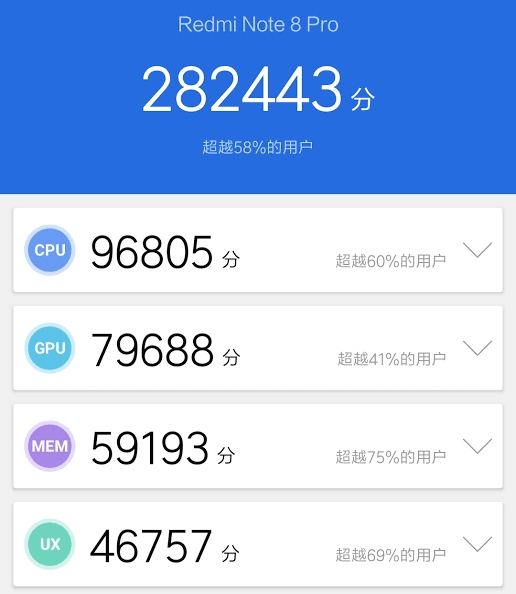
Currently, the Helio G70 and G80 smartphones haven’t arrived yet and so are the official AnTuTu scoring. But we do have the Helio G90 AnTuTu scores (around 230,000 points) and the G90T on Redmi Note 8 Pro (around 280,000 points).
So based on that, Helio G80 will have an AnTuTu score of around 200,000 points and Helio G70 around 190,000 points.
Winner: MediaTek Helio G90T
MediaTek Helio G70 vs Helio G80 vs Helio G90T – AI Comparison
Targeted as low and mid-end gaming SoCs, Helio G70 and Helio G80 don’t have an APU hence no AI capabilities are found in these two SoCs. However, they do have MTK’s NeuroPilot support and AI camera.
However, Helio G90T is quite known for its dual MediaTek APU running @750MHz which outperforms that of Snapdragon 710. So, it does have an AI camera and features such as Intelligent resource management.
Winner: MediaTek Helio G90T
MediaTek Helio G70 vs Helio G80 vs Helio G90T – Connectivity
First talking about the 4G networking, G70 and G80 run on the same modem which Cat-7, 2xCA. However, Helio G90T has a much better modem which is Cat-12, 3xCA offering better upload and download speeds and incredible signal strength (4×4 MIMO). It’s Gigabit-class connectivity.
All three have WiFi 802.11ac, Bluetooth 5.0, and four positioned GPS+GLONASS+Beidou+Galileo. Dual WiFi antennas are also supported.
Other features common are CorePilot, NeuroPilot, Pump Express, Tiny Sensor Hub, Integrated VoW, and HyperEngine Game Technology.
Winner: MediaTek Helio G90T
What’s the Price Difference Between the Three SoCs?
All three SoCs have been targeted for budget-friendly gaming smartphones. However, we do see three more categories in that. First are the under $150 gaming phones which feature the Helio G70 and the upcoming Realme C3. Then comes the under $200 phones featuring G80. Last but not least, are under $250 phones which include Redmi Note 8 Pro featuring Helio G90 and G90T.
To be honest, there shouldn’t be a large price difference between Helio G70 and G80. However, if there is, then the preferred choice would be Helio G70 based on a price-over-performance ratio. Selecting a winner in the price section between these three SoCs is quite difficult since only Redmi Note 8 Pro is the phone with G90T and there’s no phone featuring G70 and G80 at the moment. Moreover, given the fact that the price mostly depends on the manufacturer such as the price of a Realme phone is slightly lower than the one by Redmi phone featuring the same SoC.
Winner: Tie
Our Verdict
Though MediaTek Helio G90T might be the most powerful SoC in the three SoCs and the winner here, however, one can’t deny the price difference these SoCs bring. Thanks to these SoCs and MediaTek, mobile gaming will reach the rumored under $150 price tag starting with Realme C3 (Helio G70). So, each SoC here is a winner.
Thanks to MediaTek, we might see the under $150 gaming smartphones, bringing mobile gaming at entry-level and of course at the best price.
However, we do see the 12nm process as the disadvantage here in 2020.
We hoped you loved our MediaTek Helio G70 vs Helio G80 vs Helio G90T SoCs comparison. Want to know anything about these SoCs? Let us know in the comments.
SUMMARY
Helio G90T as the overpowered version of G90 is clearly the winner here because of better networking, better CPU (Cortex A76), next-level GPU, and AI capabilities. However, G70 and G80 are not bad as they bring gaming to $150 and $200 gaming smartphone categories.
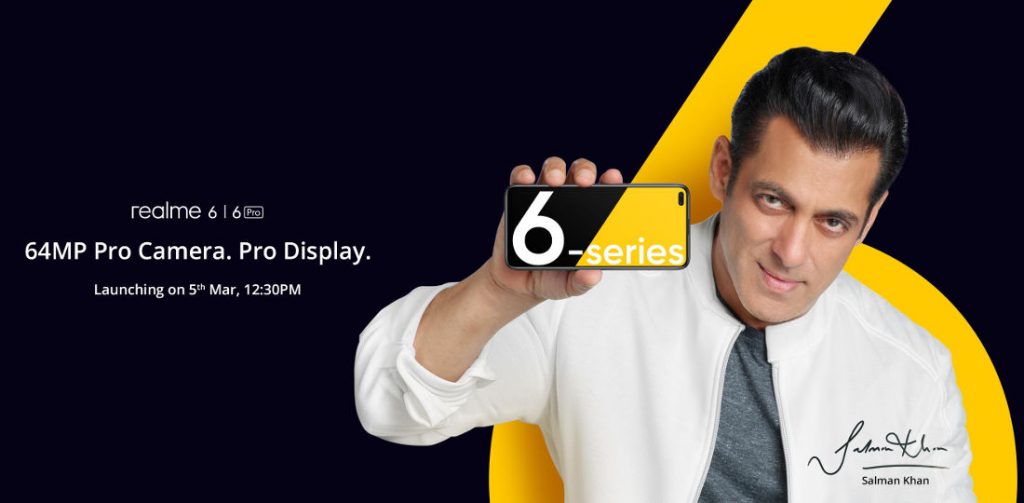
The latest lineup of affordable mid-range smartphones released by Realme is composed of three devices: Realme 6, Realme 6i and Realme 6 Pro
They cover three price segments, but all of them can be considered mid-rangers. Which phone should you go for? Depending on the kind of user you are, the answer to this question is different. There is no doubt about the fact that Realme 6 Pro is overall the most advanced one, followed by Realme 6. But not under every aspect. In this comparison, we will highlight for you the differences between the specifications of Realme 6, 6i and 6 Pro.
Quad 64 + 8 + 2 + 2 MP f/1.8, f/2.3, f/2.4 and f/2.4 16 MP f/2.0 front camera
Quad 48 + 8 + 2 + 2 MP f/1.8, f/2.3, f/2.4 and f/2.4 16 MP f/2.0 front camera
Quad 64 + 12 + 8 + 2 MP f/1.8, f/2.5, f/2.3 and f/2.4 Dual 16 + 8 MP f/2.1 and f/2.2 front camera
BATTERY
4300 mAh, fast charging 30W
5000 mAh, fast charging 18W
4300 mAh, fast charging 30W
ADDITIONAL FEATURES
Dual SIM slot, splash resistant
Design
At first glance, the vanilla Realme 6 has the most elegant design because it is more minimalistic. While the 6i comes with a notch and 6 Pro has a dual punch-hole, the vanilla version has just a single punch hole in the display. But the 6 Pro wins the design comparison because it is the only with a glass back and its rear side is way more attractive than Realme 6. The silver medal obviously goes to the vanilla version. But each of these phones has a good build quality and protection against water (they are splash resistant).
Display
The displays of Realme 6 and 6 Pro offer exactly the same specifications with the exception of the diagonal: the Pro variant has a slightly wider 6.6-inch screen (but it comes with a dual punch hole instead of a single one). In both cases, you get a Full HD+ resolution, a 90 Hz refresh rate, and a 120 Hz touch-sampling rate, as well as a high 480 nits brightness. The 6i is inferior with its 6.5-inch display sporting a lower HD+ resolution and a standard 60 Hz refresh rate. So if you need a very nice display, either go for the IPS panel of the Realme 6 or the 6 Pro without thinking twice.
Despite it is mounted on a more affordable version, the Helio G90T found on the vanilla Realme 6 has actually better CPU and GPU performance than the Snapdragon 720G found on the 6 Pro. A lot of people prefer Qualcomm’s chipsets due to MediaTek’s past, but that is the truth. On the other hand, the Snapdragon 720G has a way lower energy consumption than Helio G90T as it is built with a 7 nm production process. The memory configurations in which the two handsets are offered are the same. Realme 6i is powered by an Helio G80 chipset which is inferior to both Helio G90T and Snapdragon 720G, but it is still a very nice SoC with high GPU capabilities. With the whole trio, you get Android 10 out of the box, customized by Realme UI.
Camera
Realme 6 Pro has the most advanced cameras and despite it is not a high-end camera phone, it includes a telephoto sensor with 2x optical zoom. It even comes with an ultrawide dual front camera. Its camera potentialities are superior to Realme’s mid-rangers released during the last year, including the Realme X2. Currently, the only better camera phones from Realme are the X2 Pro and the X50 Pro 5G. The silver medal goes to the vanilla Realme 6 coming with a quad rear camera, but it lacks a telephoto sensor and an ultrawide front camera.
Battery
Realme 6i is able to offer the longest battery life thanks to a huge 5000 mAh battery and a display packing a lower resolution and a standard refresh rate. Right after, there is 6 Pro which achieves a better result thanks to its efficient Snapdragon 720G chipset.
Price
Realme 6 and 6i are available globally with price tags starting from €199 and €229, while 6 Pro is still an Indian exclusive with a price starting from Rs. 16,999 in the peninsula. At the end of the day, the 6 Pro wins the comparison. But if you do not care a lot about cameras, maybe Realme 6 is enough for you. The 6i boasts the longest battery life, but the other specs are inferior to both 6 and 6 Pro.
You’ve probably seen people covering their PC cameras with tape. The reason for the same might be possible hacking and security threat.
While it may seem a bit of a security overkill, even FBI Director James Comey recently said that everyone should put opaque tape over their computer webcams to protect their privacy. It turns out camera hacking and hijacking is a real thing, and it can affect smartphones as well.
Former Amazon Web Services security engineer and ethical hacker Ryan Pickren proved that your iPhone’s camera could be hacked and used by malicious third parties. Ryan decided to test Apple’s Safari browser for vulnerabilities last December.
Using a smart method that tested the browser with different non-conventional user behaviors, he found seven security holes in Safari for iOS and macOS. Three of these vulnerabilities allowed Ryan to take control of an iPhone’s camera and… well, do whatever he liked.
There’s nothing to worry about, however, because Ryan (like every ethical hacker) reported the issue via the Apple Bug Bounty Program in mid-December 2019. Apple then fixed the critical vulnerabilities in the Safari 13.0.5 update released January 28 and Pickren was awarded $75,000 for finding and reporting the security breach.
“I really enjoyed working with the Apple product security team when reporting these issues,” Pickren told Forbes in an interview, “the new bounty program is absolutely going to help secure products and protect customers.” So you don’t need to put tape on your iPhone’s camera, at least for now.
One of the security issues within the Zoom app could allow attackers to gain root access of a Mac machine.
HIGHLIGHTS
Zoom seems to have UNC injection flaw on Windows
Security researchers have also found issues with its macOS version
Zoom, however, is yet to patch the flaws
Zoom meetings are happening all across the globe as a large number of people are currently working from home due to the coronavirus outbreak. The remote culture has indeed resulted in popularity for the video conferencing platform that was earlier trying to compete against Google’s Hangouts Meet and Microsoft’s Skype. However, its overnight popularity has also brought it into the limelight for security researchers who’ve started finding its alleged underlying vulnerabilities. Two such researchers claim to have found a security loophole that can give attackers access to Windows passwords. Another security researcher has noticed two flaws that can be used to silently gain access to a user’s Mac and tap into its webcam and microphone.
The first serious flaw claimed to have been discovered in the Zoom app by a security researcher who goes by pseudonym g0dmode is about UNC paths. The Windows client is found to convert networking UNC paths into a clickable link in the chat message. This can be utilised by any attackers to capture Windows passwords, as noticed by security researcher Matthew Hickey, who operates Twitter account @HackerFantastic.
In addition to the UNC injection flaw, the Zoom app is said to have two distinct security loopholes that could allow attackers to gain root access and take over a user’s Mac system.
Former NSA hacker and principal security researcher at Jamf Patrick Wardle has spotted the bugs that exist within the macOS version of the Zoom app. Both bugs are said to be initiated by a local attacker, someone who has physical control of the system, as noted by TechCrunch.
The attacker can gain access to the computer once exploited and install malware or spyware, without letting users know about the backdoor entry. The issue that allows unwanted access is due to the installer that can easily be injected with malicious code and used to obtain root-level user privileges.
Security researcher Felix Seele also highlighted the allegedly vulnerable macOS installer of the Zoom app in a tweet posted on Wednesday. “Turns out they (ab)use preinstallation scripts, manually unpack the app using a bundled 7zip and install it to /Applications if the current user is in the admin group (no root needed),” he tweeted.
Ever wondered how the @zoom_us macOS installer does it’s job without you ever clicking install? Turns out they (ab)use preinstallation scripts, manually unpack the app using a bundled 7zip and install it to /Applications if the current user is in the admin group (no root needed). pic.twitter.com/qgQ1XdU11M
Aside from the unsafe installer, Wardle claims to have been able to find another security bug in the macOS variant of the Zoom app that can allow an attacker to inject malicious code to access the webcam and microphone of the system. The researcher was able to trick the client using his proof-of-concept.
“No additional prompts will be displayed, and the injected code was able to arbitrarily record audio and video,” Wardle wrote in a blog post while elaborating the security flaw.
Zoom hasn’t yet fixed any of the reported flaws. However, Gadgets 360 has reached out to the company to understand its take on the fresh vulnerabilities that could impact several users worldwide — given the growing adoption of the app due to the coronavirus outbreak.
It is important to note that apart from the four new security issues that have been discovered by the security researchers, Zoom was recently in the news for its misleading end-to-end encryption claim. The app was also found to have a flaw that exposes emails and photos of users. Furthermore, it is also under scrutiny in the US after users complained about being startled by porn during virtual meetings.
After a notification from TRAI asking telecom operators to help customers tide over the lockdown with minimal hassle, DTH players like Tata Sky have come up with special offers to encourage people to stay home.
HIGHLIGHTS
Tata Sky announced it is now offering emergency credit facility for free to customers.
The loan is aimed at non-tech savvy viewers who may find it difficult to recharge their accounts under present circumstances.
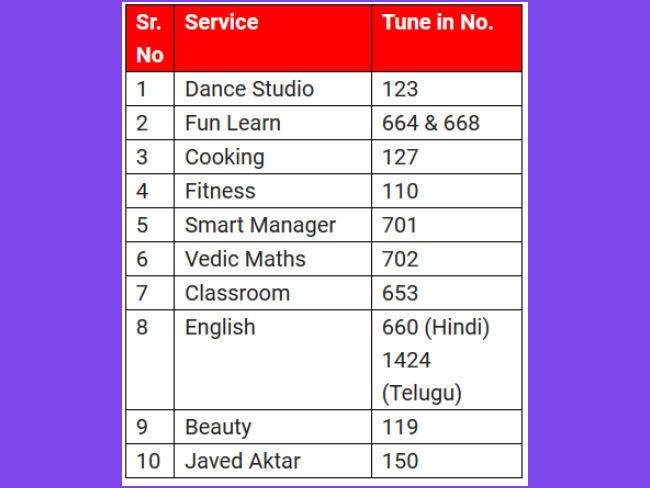
The company has also made ten of its interactive content services free for subscribers.
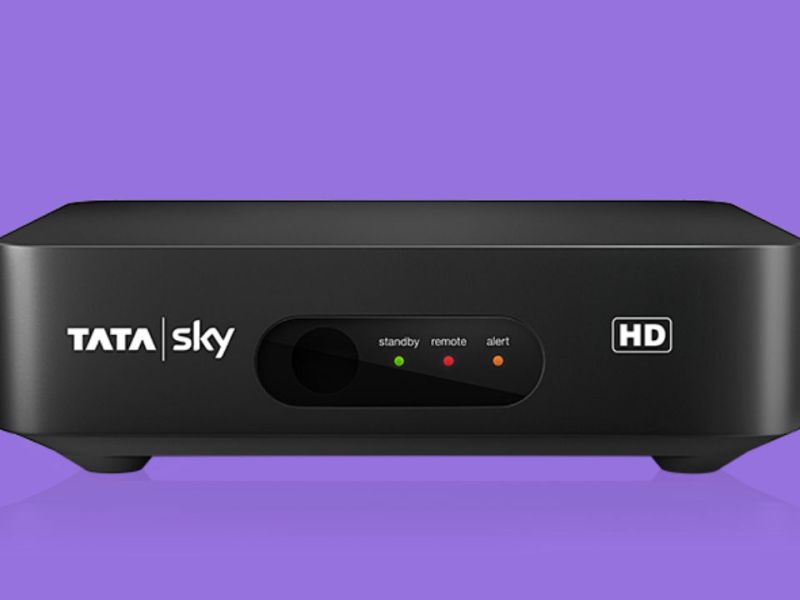
Tata Sky announced it is now offering emergency credit facility for free to its customers. The company has also made ten of its interactive content services free for subscribers.
The company has also made ten of its interactive content services free for subscribers.
WHAT IS TATA SKY’S EMERGENCY CREDIT FACILITY
The emergency credit facility is for those who are unable to recharge their account because of the inability to find a dealer to do it for them. For these subscribers, Tata Sky is offering a balanced loan for a specified time period. The balance credit under this loan will be debited from the user’s account as soon as they re-activate the service, without any interest charged. The loan is aimed at non-tech savvy viewers who may find it difficult to recharge their accounts under present circumstances.
HOW TO AVAIL THE EMERGENCY CREDIT FACILITY?
To avail the service, send a missed to Tata Sky on 080-61999922.
TEN FREE INTERACTIVE CHANNELS
Tata Sky is also offering free access to ten interactive channels on the network. That includes Dance Studio, Fitness, Smart Manager, Vedic Maths, and more. The channels can be accessed from the Tata Sky set-top-box or from the Tata Sky app, available on Android, iOS and Windows.
Previously, Tata Sky also started offering its Fitness services for free to encourage people to stay home during the lockdown.
Ever since TikTok rose to stardom, video viewership has somewhat migrated over to the short-video format from YouTube
HIGHLIGHTS
YouTube is creating a feed of short videos posted by users.
Called ‘Shorts’, the feature will rival popular short-video app TikTok.
YouTube is planning for a late 2020 release.
Now according to a report by The Information, YouTube is working on its own TikTok rival.
Reportedly called ‘Shorts’, it will live inside the YouTube and will be a hub of short videos posted by users. The company hopes it will be able to entice users to make videos on its platform through its vast collection of licensed music as backing tracks for these videos.
Short-format videos took off courtesy of TikTok which launched in China in 2016 and over time has taken over the world. In India especially, it’s one of the most downloaded apps.o
But TikTok is not free of controversies, either. An endless feed of short videos has been blamed for internet addiction among many Indians. The app was also banned for apparently being a threat to national security. YouTube here may have a chance of toppling it, even though the popular video-streaming app is not void of controversy either.
The report claims YouTube is planning to launch the feature by the end of 2020, although looking at the present situation where people are mostly stuck indoors, this could be the best time for YouTube to launch the short video format.
If you are a BSNL user, then there is good news for you, based on where you are. The telecom operator has announced two data-only plans priced at Rs Rs 693 and Rs 1,212 and validity of 365 days.
HIGHLIGHTS
The BSNL prepaid plans priced at Rs 693 and Rs 1,212 offer data only and no voice calls or SMS services.
The two plans are available in select regions only.
The Rs 693 plan brings 300GB of data while the Rs 1,212 plan brings 500GB of data, both with a 365 days validity.
With these recharges, users don’t get SMS or voice calls, so you will have to recharge separately for those. The two plans – Rs 693 and Rs 1,212 bring with them 300GB and 500GB data respectively. There is no daily usage limit and the users can consume data as and when they like within the validity period. As of writing this story, the plan is available in Andhra Pradesh & Telangana circles according to TelecomTalk. You should use the BSNL app or website to check if the plan is available in your circle.
BSNL also recently launched the Rs 551 plan that offered users 5GB data per day and a validity of 90 days. This means the user gets a total of 450GB of data.
In other telecom related news, due to the Coronavirus outbreak, the TRAI has asked telcos to ensure uninterrupted voice and data services for all users by increasing prepaid plan validity. Reliance Jio, Airtel, Vodafone Idea and BSNL have been asked to increase the validity to ensure uninterrupted services to subscribers. You can read more about that here.
If you are using a BSNL broadband connection, then know that there is a BSNL Work@Home plan. The plan offers users 5GB data daily at 10 Mbps speeds and unlimited data at 1 Mbps speeds after reaching the FUP. You can read more about that plan here.
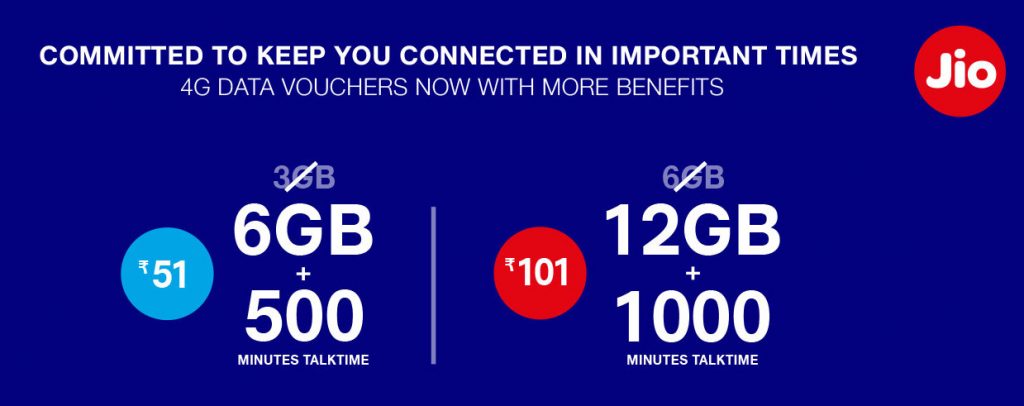
If you are a Reliance Jio user, then there are some revised data plans that you can check out. The telecom giant has revised the Jio 4G data packs priced at Rs 11, Rs 21, Rs 51 and Rs 101. The data on offer in these packs has doubled. You can check out their details here.
Xiaomi celebrating its 10th Anniversary introduced Redmi Brand, the first band under the Redmi brand in China.
The news of Redmi Band getting launched had been doing rounds and as we posted yesterday based on the news of Redmi smartband launch today, the same has happened as promised.
Redmi Band specifications, features
The new Redmi band has finally launched and it has a 1.08-inch square color display, promises up to 14 days of battery life and comes with built-in charging port that plugs into a USB-A port on the charger, laptop or PC so that you don’t want to be searching for the charging cable.
The band has heart rate sensor, comes with activity tracker, sleep monitor, sedentary reminder and lots more. We should have the complete specifications once the online event ends.
When will it launch in India ?
Given the current situation, the fitness band may take time to hit the Indian shores. However, if the launch happens, Xiaomi’s new gadget is expected to counter Realme’s first fitness band and even Honor’s own line-up of budget fitness bands.
The Redmi Band comes in Black, Blue, Green and Orange colors, is priced at 99 yuan (US$ 14 / Rs. 1,060 approx.) and will go on sale in China from April 9th.
Currently, the Mi Band 4 sells in India at a price of Rs 2,299 and there’s a cheaper version of the same known as the Mi Band 3i that sells at Rs 1,299. The Mi Band 5 could either replace the Mi Band 4 in India or it could sit above the Mi Band 4 at a slightly premium price. We will keep you updated as and when more details are available.
Due to lockdown, work from home and other fun activities have increased and reliance on messaging platforms has led to increased popularity.
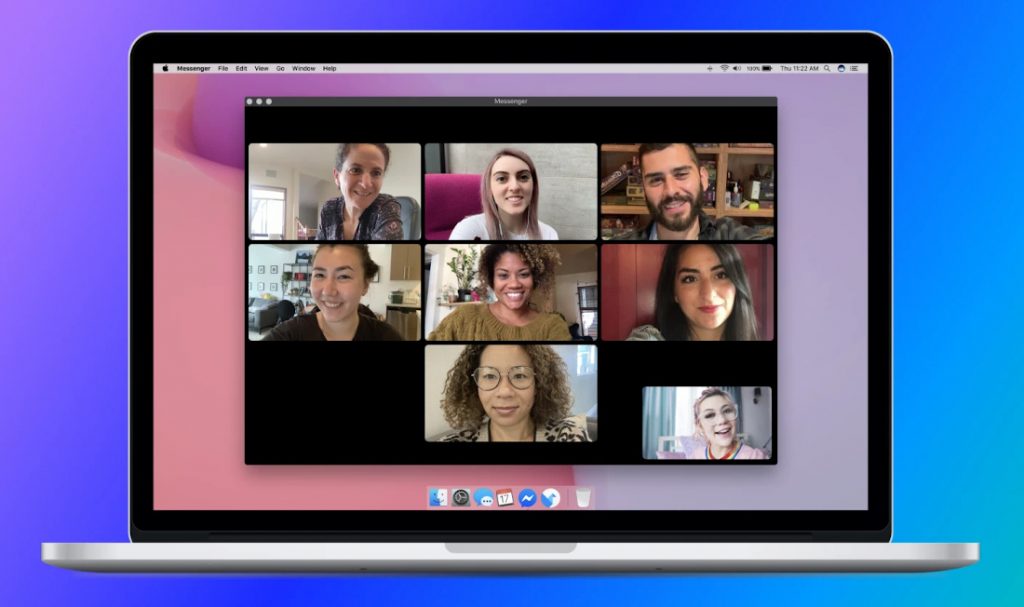
It is video chatting season for everyone in quarantine and with Zoom rising to popularity, Facebook has decided to enter the fray with a desktop app for its Messenger, both for macOS and Windows. It features group videos calls, chat sync across, dark mode and more.
One of the difficulties with most group chatting apps is the complexity involved in just inviting everyone into the chat. With nearly everyone, including family and friends on Facebook, it is definitely easier to connect with them as they will likely have a Messenger account by default. And since it is a desktop app, you can continue running it in the background, while doing other things on your desktop.
There are push notifications support (which is not a surprise), and it can be muted or snoozed on a per chat basis. Chats will naturally be synced across all devices and the Facebook has also added support for Dark Mode, GIFs emoji. Facebook Messenger Desktop is available for both Windows in the Microsoft Store and macOS from the App Store.
After more than two months since news of Redmi launching a smartband surfaced, we finally have a launch date. Thankfully, we do not have to wait for long.
Xiaomi‘s fitness band has always been known for its cheap pricing, solid build and good performance. Since the Mi Band 4 was released, the units have sold massively. A survey of wearable devices in China by IDC for Q3 2019 had revealed that Xiaomi’s wearables command 25% of the market. Of course, most of the wearables sold were the Mi Band series
The official Redmi Weibo account shared a poster today teasing the arrival of its first wearable which should arrive as the Redmi Band. According to the Weibo post, the wearable will be announced on April 03, 2020 at 14:00 hrs (China Time).
The poster says the unnamed smartband launches too at 14:00 hrs. It has a rectangular color display and will be available in orange, green, black, and blue. We can’t say outrightly that this is the Redmi Band since the manufacturer’s logo isn’t on the poster. However, based on the leak from January which shows the Redmi Band with a rectangular display, there is a high chance it is it.
The Redmi Band should come with features such as a calorie counter, pedometer, and a heart rate sensor. It should also be able to receive notification alerts when connected to the phone. We won’t rule out the possibility of it having NFC for payments.
While the poster doesn’t show the smartband itself, another poster has surfaced on Weibo that may possibly be that of the Redmi Band, although it is not stated.
Houseparty is owned by the makers of Fortnite, Epic Games. The developers claim there is no evidence to suggest that the platform has been hacked and its data stolen.
HIGHLIGHTS
Houseparty is owned by Epic Games, the developers of popular game Fortnite
Several users claim the app has been hacked
Houseparty is fun video conferencing application
Epic Games owned Houseparty has become a rage in the last few weeks, with the app notching up millions of new subscribers every day. In fact, the Covid-19 outbreak has turned out to be such a lucky break for its developers that the global lockdown has seen the fun video conferencing platform climb the ladder and become one of the most downloaded apps on both Google Play and App Store in the last few days.
Yet, it appears this impressive run could be cut short with several users now uninstalling the app and also removing their accounts from the platform over fears of a data breach that could have exposed their passwords to hackers and left not only their social media handles affected, but also their banking accounts too.
The situations has gotten so bad in the last 24 hours that the complaints have reached viral number, with users across twitter sharing concerning details about how their Spotify, Netflix, and other accounts, including Paypal and banking ones, were hacked after installing Houseparty.
Interestingly, all these complaints appear to have been made without any evidence, with users simply going online and blaming the app for their accounts being hacked without first establishing any sort of correlation.
All Houseparty accounts are safe – the service is secure, has never been compromised, and doesn’t collect passwords for other sites.
The company too has clarified its stance on the matter and has suggested there is no link between the instances of compromised accounts and the platform.
According to new reports, it seems that attackers may use ‘social hacking’ to gain access to a user’s WhatsApp account.
HIGHLIGHTS
Attackers may be using ‘social hacking’ to hack into WhatsApp accounts
This technique sees attackers using pre-hacked accounts to get in touch with a victim and masquerade as a friend or family
They would then trick the victim into sharing their WhatsApp verification code with them
During these lockdown times, while eveeyone is spending so much time at home working and entertaining that several video calling apps surfaced including new and already existing ones. But so has it opened gates for the hackers who are working like hawks to intrude into those apps via loopholes.
WhatsAppp is arguably the most popular instant messaging platform in the world right now. So obviously, it makes a pretty juicy target for hackers.
Social hacking works by using an already hacked account to gain the trust of a target by masquerading as their friend or family member. In this case, reports suggest that attackers are using pre-hacked Facebook or Instagram accounts to get in touch with any connected accounts. They then pretend to be having problems logging into their accounts and later try and trick the victim into sharing their WhatsApp security verification code. This technique would then give the attacker access to the victims WhatsApp, and then the cycle of social hacking could then begin anew with the victim’s contacts.
The best way to stay safe from such hackers is to never share any verification codes or any other personal information with anyone online, regardless of how close you may be with the individual. Further, ensure that you have enabled two-step verification for all possible accounts, not only WhatsApp. You should also add an email address in case you would need to retrieve your account. Further, if your WhatsApp account has been compromised, then there are ways you can retrieve it. In fact, WhatsApp has also detailed the same on a separate help page that you can check out here.
WhatsApp isn’t the only platform that is allegedly under attack from hackers. Recent reports suggest that the Houseparty app was said to be leaking data to attackers. As per reports, many users claimed that they were getting emails about someone trying to access their accounts after they had installed the app.
Apple has been working on a low-cost iPhone, which could be named iPhone SE 2 or iPhone 9, and will serve as the successor to the iPhone SE launched back in 2017.
Apple launched the compact iPhone SE back in 2016 with iPhone 5s-like design and while Apple shifted the design language starting with iPhone X, a lot of users have been waiting for a refresh to the iPhone SE. Multiple renders and rumors surfaced on the iPhone 9 / iPhone SE 2 recently and now a new report suggests that Apple could finally announce the iPhone 9/ iPhone SE 2 on April 15th, 2020.
The smartphone is said to go official before its WWDC 2020 event. While the phone was expected to launch at an event on 31st March but that event was reportedly cancelled amid the on-going coronavirus and issues related to that.
According to an internal meeting by Apple yesterday, the company is said to be preparing for the announcement of the iPhone 9 on April 15th, 2020 and the shipments could start on April 22nd, 2020. Previous rumors suggested that Apple could announce the iPhone 9 / iPhone SE 2 at an event on March 31st, but it did not happen.
Furthermore, the company is said to train a select few retail employees who are working remotely to offer technical and sales support to users and is reportedly sending iMacs to them.
Another report confirms the development that Apple is asking select retail employees who are working remotely to offer sales and technical support to users.
The renders of the iPhone SE 2 / iPhone 9 surfaced earlier suggest that the SE 2 is said to sport an LCD screen and this time around, the 3D touch is not said to make a return. It is said to measure 138.5 x 67.4 x 7.8 mm in size and 8.6mm including the rear camera bump, and just to compare, iPhone 8 measures 138.4 x 67.3 x 7.3 mm in size. While the form factor of the iPhone SE 2 is said to be similar to the iPhone 8, SE 2 is said to sport a frosted glass back instead of a glossy back that was present on the iPhone 8 but will be powered by the A13 chipset — the same SoC that powers the iPhone 11 series.
As per the reports, the pricing for this upcoming iPhone could start at just $399. However, to know for sure what the device packs and how much it will cost, we’ll have to wait for a couple of weeks more for the the official launch announcement to take place.
Due to the ongoing COVID-19 crisis, the announcement of the iPhone 9 could be further delayed as well. We should know more information in the coming days.
As a result of Coronavirus while social distancing is happening and in fear of Coronavirus Effect most people are working from home being lockeDown and using social apps to avoid boredom and remain in communication.
HIGHLIGHTS
We compiled a list of free group video calling apps that you can use to dial in and have a small party right on your phone’s screen.
These include apps like Zoom, Google Duo, Instagram and more.
You no longer have to stay bored at home with these video calling apps.
Bored during the lockdown? While the coronavirus-induced nation-wide lockdown is like a dream for introverts, the social butterflies may find it difficult not seeing the regular faces to talk to. Sure, your organisation has ramped up its infrastructure to support group video calls with its employees, but what about when you have to get together with your friends sitting at your home? We compiled a list of free group video calling apps that you can use to dial in and have a small party right on your phone’s screen. Here they are —
ZOOM
Zoom has emerged as the undisputed champion among video calling apps during the lockdown. It has already surpassed TikTok and Instagram to become the most downloaded app in India with many organisations, colleges and schools relying on the app for business. You can also use it for your personal calls. 40 minutes chats on the app are free, post which you have to pay with plans starting from $14.99.
The USP of the app is the number of people it can support. A Zoom session can support up to a 100 people and the app’s algorithm ensures smooth connectivity and clean audio.
This app from Google started with two-way video calling but soon expanded to support up to 8 people in a chat. And recently Google announced it will support up to 12 people to let you stay connected with a lot more people. Duo is probably the easiest app to use for video-calling. There’s no hassle of typing in a username and getting it verified. All you need is a phone number.
The USP of Google Duo is in its simplicity. It may not support a lot of people in a chat, but it’s free and is available across all platforms including iOS and Android. Our favourite feature of the app is its ability to show what the person who is calling you is doing even before you pick up the call.
Your favourite social media platform also supports video calling. It’s built into the DM section which is good for a quick call. It also supports up to six people in a group call and the quality is surprisingly good.
The USP is its availability. By now, most of your friends will have an Instagram account, so initiating a session shouldn’t require a lot of setup.
Ever since WhatsApp added video calling, and especially with the proliferation of 4G data, video calling itself have taken off like anything in the country. And that’s simply because WhatsApp is the most used messaging app in India. You can take up to four people in a session with average video and audio quality.
The USP is of course the wider availability. Anyone with a smartphone can join in and it doesn’t need extra steps to set up.
Facebook Messenger has had video calling support for quite some time now. And with each update, the app has added more and more features to make it more interactive and fun. Surprisingly though, it’s usage has been limited to few users with many still choosing to go with Instagram and WhatsApp. Perhaps it has something to do with how much resources it ends up consuming.
The USP of this are the fun AR filters it supports. You can spend hours trying out fun and creative filters with your friends.
HOUSEPARTY
This fun app has been around for quite some time but it also during quarantine that it has gone viral (too soon?). The app supports eight people in a room and you can drop in and out as you please.
The USP of this app is the way it’s designed to bring out the real you. It acts as a social network but doesn’t let you post a status or anything. Instead you just call up friends you want to chill with and chat or play games together. It’s fun. At least the first few times.
GoI had recently declared increase in GST by 6% on smartphones and the same has come into effect as of April 1
HIGHLIGHTS
The Indian government hiked the GST on mobile phones from 12 percent to 18 percent from April 1, 2020.
This, compounded with the supply chain and logistics disruption caused by the nation-wide lockdown has further led to the increase in prices
Fluctuations and depreciation of currency value are also being blamed for this.
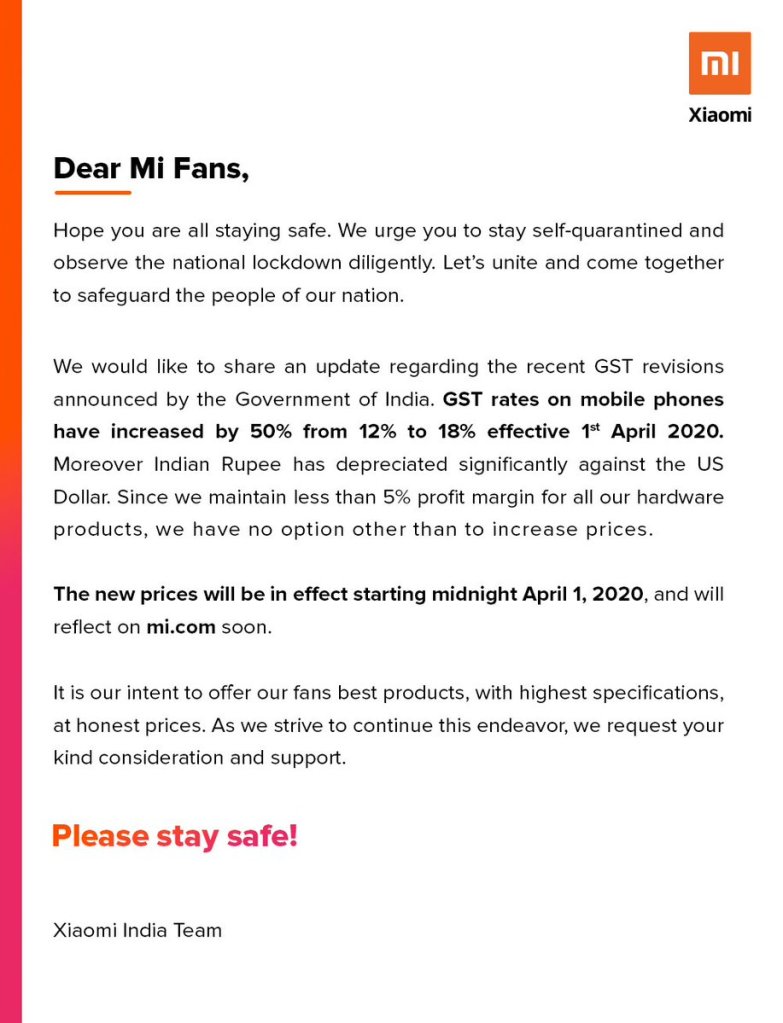
Last month, the GST Council in its 39th meeting increased GST rates for several products including mobile phones from 12% to 18% applicable from April 1st, 2020 and a while back Apple, Poco announced the new prices. Now, Redmi, OPPO, vivo, realme, Samsung, and iQOO have announced the new prices of their smartphones and here’s a list of smartphones with new prices post-GST Rate Hike.
After Xiaomi’s Manu Kumar Jain announced the hike in prices from April 1st, Poco India General Manager C. Manmohan also chimed in with a hike in the prices for the Poco X2. Oppo and Realme also followed suit with announcements explaining why they have to raise prices at a time when the economy is already going to recession.
Mi fans, #GST on mobile phones has increased by 50% from 12% to 18%.
After much deliberation & in keeping with #Xiaomi policy of maintaining <5% margin on our hardware products,we will be increasing prices of our products.
“Today we are announcing that realme smartphones will have to boost the prices up for the first time since 2018. It’s never easy for realme as a new brand to keep providing the latest technologies across different price segments in India. We sincerely hope you will continue to support not only us but also the whole smartphone industry, for more amazing technologies and surprises in the future,” Realme wrote in a statement.
Hi #POCO fans. GST on mobile phones has increased from 12% to 18%. Also with a falling rupee against the US dollar & supply chain issues, it has become extremely difficult to continue with the same pricing. As a result, we are left with no choice but to adjust pricing. pic.twitter.com/mY7TVpsp2f
Oppo too has given in to the hike in GST and according to a Twitter update from a Mumbai-based smartphone retailer, Mahesh Telecom, the company has hiked the market operating price (MOP) of as many as 11 smartphones. Check the list below for the change in prices.
After the hike, the iPhone 11 Pro Max 64GB will start from Rs 1,17,100 up from Rs 1,11,200. Similarly, the iPhone 11 Pro 64GB will be priced at Rs 1,06,000, up from Rs 1,01,200. The iPhone 11 64GB also became more expensive at Rs 68,300, up from Rs 64,900.
Older iPhones including the iPhone XR saw price hiked to Rs 52,500, up from Rs 49,900. Similarly, the iPhone 7 32GB now starts from Rs 31,500, up from Rs 29,900.
Here is the list of change in prices by other smartphone brands:
Xiaomi’s entire launch schedule until September 2020 has been unveiled and there are a lot of exciting phones coming under Mi, Redmi and Poco brands.
HIGHLIGHTS
The entire launch list of Xiaomi phones for 2020 has been leaked.
Xiaomi will launch the Mi A4 series in August.
The Poco F2 and Poco F2 Pro will come out in September 2020.
It has only been three months since 2020 began but Xiaomi has already launched multiple phones under different sub-brands. A new Poco phone has emerged and following that, the Redmi Note 9 series, the Mi 10 series and Redmi K30 Pro have come in various markets. However, Xiaomi has lots of plans when it comes to new smartphones this year and thanks to another tipster, the entire launch list for Xiaomi phones has been leaked.
The list includes all the phones we have seen so far from Xiaomi and it lists all those that will be coming soon. Until September, Xiaomi will be launching at least two phones every month and that includes phones across all price points. This includes phones from the Mi series, Redmi series and Poco, including all the markets where these brands operate.
Xiaomi launch schedule leaked listmonth wide
April:
Mi 7 2020: Rumours have been going around a new compact phone from Xiaomi that is said to rival the rumoured iPhone 9. The Mi 7 2020 is said to be that phone that will have premium specifications in a compact body.
MIX Alpha: The MIX Alpha concept phone could finally go on sale in China in April.
Poco X2 Pro: This could be the Redmi K30 Pro rebranded for the Indian market.
Redmi Note 9: This could be the 5G variant slated to launch in China.
Redmi Note 9S+: This could be the Redmi Note 9 Pro for the European markets.
May:
Mi 10T, Mi 10T Pro: These could be the rebranded Redmi K30 and Redmi K30 Pro for the European markets.
TRAI has asked the OTT and streaming platforms to reduce their streaming quality while the data usage due to home presence has increased manifold.
HIGHLIGHTS
COAI has written to OTT services asking to reduce streaming quality to reduce the burden on the network.
COAI has requested OTT platforms to reduce streaming quality from High Definition (HD) to Standard Definition (SD).
COAI has asked for a period of no advertisements and pop-ups in websites claiming these also add to high bandwidth consumption.
The industry body of Cellular Operators Association of India (COAI) has written to the telecom department and OTT streaming services including Netflix, Hotstar, Amazon Prime Video and others to lower streaming quality in order to reduce the burden on the networks, which is at an all-time high due to people staying and working from home amidst the Covid-19 outbreak.
“We believe that during this critical time, it is absolutely essential for the streaming platforms to cooperate with telecom providers so as to manage the traffic distribution patterns which are likely to strain the network infrastructure at a time when it is needed for various critical requirements,” COAI said in a letter to video streaming companies.
In order to manage the strain on cellular networks, COAI has requested OTT platforms to reduce streaming quality from High Definition (HD) to Standard Definition (SD). COAI has reached out to Amazon Prime Video, YouTube, Hotstar and Netflix.
Advisories have been issued in India asking people to stay at home and not come to work or gather in public places. There’s a surge in work from home, online education, digital payments, online healthcare and other areas which are relying heavily on the internet. In regard to this, Reliance Jio already announcing doubling data limits on its prepaid packs.
This sudden surge in digital use is already putting pressure on the network infrastructure of the Telecom Service Providers (TSPs). The TSPs are taking requisite steps to manage this load and facilitate the smooth functioning of the networks during this critical time,” COAI told ET Telecom.
Furthermore, COAI has asked for a period of no advertisements and pop-ups in websites claiming these also add to high bandwidth consumption, and if required these may be replaced with public announcements or awareness regarding the virus.
COAI has also reached out to the Department of Telecom (DoT) to enforce the directive on streaming apps.
Notably, similar measures have been taken by streaming services like Netflix in the US and Europe as more countries go into lockdown to prevent contagion from the coronavirus.
AMIDST CORONA PANDEMIC TRAI ASKED THE TELCOS IN INDIA TO EXTEND THE VALIDITY OF THE PREPAID PLANS
HIGHLIGHTS
TRAI has asked telcos to ensure uninterrupted voice and data services for all users by increasing prepaid plan validity.
Reliance Jio, Airtel, Vodafone Idea and BSNL have been asked to increase validity to ensure uninterrupted services to subscribers.
TRAI reasoned that because of the lockdown, subscribers who wish to top up their balances or wish to extend their plans may be unable to do so because of disruption in services.
The Telecom Regulatory Authority of India has asked telecom service providers including Reliance Jio, Bharti Airtel, Vodafone Idea and BSNL to extend the validity of prepaid plans amidst the Coronavirus lockdown in India.
TRAI has asked telcos to ensure uninterrupted voice and data services for all users by increasing prepaid plan validity. In a letter dated March 29 to telecom companies, the telecom authority asked companies to take every measure to allow prepaid subscribers to continue enjoying unlimited services during the period of lockdown.
Read More: Vodafone revises Rs. 95 prepaid plan with 56 days validity in selected circles
TRAI has also asked for details from telecom providers on the measures they are taking to ensure service availability to customers on priority. More than 90 per cent of all subscribers in India use prepaid services. There are over 800 million active prepaid users.
“Though the telecommunication services have been considered as essential services and thus granted an exception from closing down. However, lockdown may adversely affect the working of customer service centres/point of sale locations,” TRAI said in a notification.
TRAI reasoned that because of the lockdown, subscribers who wish to top up their balances or wish to extend their plans may be unable to do so because of disruption in services. Extending validity until the lockdown lifts can help provide relief.
OnePlus will be launching its next smartphone, the OnePlus 8 and OnePlus 8 Pro on April 14.
HIGHLIGHTS
OnePlus 8 Pro will sport a 6.78-inch Super AMOLED display with support for a 120Hz refresh rate.
OnePlus 8 will come equipped with a 6.55-inch Super AMOLED display
OnePlus 8 Pro will feature a 48MP Sony IMX 689 primary sensor with an f/1.78 aperture.
When will One Plus 8 Launch ?
The launch event will be live-streamed through the OnePlus official website and YouTube. It will commence at 8:30 PM on April 14.
ONEPLUS 8 PRO SPECIFICATIONS
According to the tipster, OnePlus 8 Pro will sport a 6.78-inch Super AMOLED display with support for a 120Hz refresh rate. It will be powered by the Qualcomm Snapdragon 865 SoC. Further, the smartphone is likely to come with 8GB/12GB of LPDDR5 RAM and 128GB/256GB of UFS 3.0 internal storage.
As per previous leaks, OnePlus 8 Pro will feature a 48MP Sony IMX 689 primary sensor with an f/1.78 aperture + a 48MP Sony IMX ultra-wide-angle lens with an f/2.2 aperture and 120-degree field of view + an 8MP telephoto lens with 3x optical zoom and 30x digital zoom + a 5MP colour filter. The camera is said to pack new features like new night portrait mode, “3-HDR” video, cinematic effects and better OIS.
On the front will lie a 16MP selfie shooter. The smartphone will pack a 4510mAh battery with support for 30W fast charging. This time around OnePlus is likely to add 30W wireless fast charging support as well as 3W reverse wireless charging. The phone will be IP68 rated and come in blue, black and green colour options.
Regarding the launch, Pete Lau, Founder and CEO, OnePlus, said:
With the OnePlus 8 series, we’re excited to introduce our most powerful and beautiful smartphone series ever, combining blazing-fast 5G capabilities, specially engineered high refresh rate displays and OnePlus’ signature powerful performance setup. The OnePlus 8 series will bring a truly ‘burdenless’ experience to all our users, who have come to expect nothing but the best all-around flagship smartphones from us. No detail is too small for us, as OnePlus always strives to deliver the best user experience possible with our premium flagship devices.
ONEPLUS 8 SPECIFICATIONS
According to the latest development, OnePlus 8 will come equipped with a 6.55-inch Super AMOLED display. Interestingly, it is said to support a 90Hz refresh rate, instead of 120Hz on the OnePlus 8 Pro. Further, the phone will be powered by the Snapdragon 865 chipset. It will come with 8GB/12GB of LPDDR4X RAM and 128GB/256GB of UFS 3.0 internal storage.
As for the optics, it is said to sport a triple rear camera setup of 48MP + 16MP + 2MP with a 16MP selfie shooter. It is likely to pack a 4300mAh battery with support for 30W fast charging. Further, there’s no IP rating or wireless charging here. It will be made available in three colour options. The three colour variants are – Glacial Green, Onyx Black and Interstellar Glow gradient.
Trai RECENTLY asked THE telcos to increase their plan validity amidst the corona pandemic especially considering most subscribers in india are on prepaid plans.
Prior to the tariff hike, Vodafone Rs. 95 ‘AllRounder’ prepaid plan earlier offered 500MB of data with 28 days validity. Now, the same plan offers 56 days validity but comes with a reduced data of 200MB. Users get a talk time of Rs. 74 and local/national calls are charged at 2.5p/sec.
Read More: TRAI ASKS JIO, AIRTEL, BSNL AND VODAFONE IDEA TO EXTEND VALIDITY OF PREPAID PLANS
So apart from the newly introduced Rs 95 prepaid plan, there are existing all-rounder packs like Rs 39, Rs 49 and Rs 79.
The Rs. 95 plan offers the highest validity in the ‘AllRounder’ pack and the other plans include Rs. 49 and Rs. 79 plans. The revised Rs. 95 ‘AllRounder’ pack which is generally used for validity extension is available in select circles and that includes Bihar, Chennai, Karnataka, Kerala, Madhya Pradesh, Mumbai, and Tamil Nadu.
Furthermore, IDEA users from the above-mentioned circles can also avail this plan. The revised plan can be availed online and at existing checkpoints.
in the midst of a worldwide lockdown to curb the menace of the Coronavirus outbreak, the usage has certainly spiked up.
HIGHLIGHTS
WhatsApp has limited video status messages to under 15 seconds.
It’s a temporary measure to reduce strain on networks with more people working from home due to coronavirus.
The change affects all users on Android and iOS.
With over a billion users around the world, WhatsApp is easily one of the most used messaging apps today. And, in the midst of a worldwide lockdown to curb the menace of the Coronavirus outbreak, the usage has certainly spiked up. Indians, in particular, love using the app to stay in touch, send forwards, share memes and videos. That also leads to consuming a lot of bandwidth, something that we are being told is constrained with so many people staying home and tuning in to streaming services and playing online games.
Previously, YouTube, Netflix and other streaming websites agreed to cut down their video quality to free up more bandwidth. Now, WhatsApp is also joining the league by limiting status videos to 15 seconds. You were allowed to post a 30-second video up on your status previously, but now WhatsApp has cut it down to just 15 seconds to reduce bandwidth consumption.
ANNOUNCEMENT: You can no longer send videos to WhatsApp Status if they are longer than 16 seconds: only videos having a duration of 15 seconds will be allowed. This is happening in India and it's probably an initiative to reduce the traffic on the server infrastructures.
The information was shared by the folks over at WABetaInfo on Twitter as showing above. The tweet read, “You can no longer send videos to WhatsApp status if they are longer than 16 seconds: only videos having a duration of 15 seconds will be allowed. This is happening in India and it’s probably an initiative to reduce the traffic on the server infrastructures.”
The new update will impact all users in India, no matter if you are using a stable version or a beta version. But it’s expected that this change is only temporary till the lockdown lifts and strain on the bandwidth comes down.
Just to refresh, WhatsApp Status is basically Instagram Stories for the platform. It replaced text-based status messages (they’re still there but with a different name) to let users upload photos and videos to share with friends. The content disappears automatically after 24 hours. And by the looks of it, if cutting down the video length to 15 seconds will let many others enjoy the fruits of the internet. It’s just a small luxury to give up in the larger scheme of things.
Details about the Redmi 9 smartphone surfaced back in December last year, which said that the phone will be powered by MediaTek Helio G70.
Now new details about the phone have surfaced along with the live image of the back of the with the camera part that looks similar to the Redmi K30 / POCO X2.
This reveals that the phone will be powered by MediaTek Helio G80, which is slightly faster than the Helio G70 that made its debut in the realme 6i earlier this month, and this was supposed to launch in India as Narzo 10 last week, but the event has been postponed.
Coming to the cameras, the phone is said to feature a 13-megapixel main camera, 8-megapixel ultra-wide camera, 5-megapixel macro and a 2-megapixel depth sensor. The image also reveals a rear-mounted fingerprint scanner compared to side-mounted scanner in the Redmi Note 9 Pro series. It is said to come in Purple, Green and more colors.
Display and Storage
Earlier rumors revealed 6.6-inch DoT notch display compared to the 6.22-inch screen on the Redmi 8, 4GB RAM + 64GB storage version, but there should also be 3GB RAM + 32GB storage version. Other details such as battery and price are unknown, but it will likely retain the 5000mAh battery.
Launch Date
The Redmi 9 was supposed to be introduced sometime in Q1 2020, but new rumors from China says that it could be pushed to May. We should know more details in the coming weeks.
CAD render of the OnePlus 8 surfaced back in October last year and the detailed specifications surfaced earlier this week
The phone reveals 6.5-inch Full HD+ 90Hz Fluid AMOLED display, Snapdragon 865 with 5G support, bigger 4300mAh battery with support for warp Charge 30T Fast Charging and also revealed Interstellar Glow, Glacial Green and Onyx Black colors for the phone. Now the press render of the phone has surfaced in all the three colors as we inch closer to the launch.
Two days after the smartphone’s complete specifications list appeared online and only 24 hours after press renders of the pricier OnePlus 8 Pro leaked, Steve Hemmerstoffer has now published marketing images of the standard OnePlus 8.
This confirms the punch-hole screen, minimal bezels, metal frame and triple rear cameras.
OnePlus 8 rumored specifications
6.55-inch Full HD+ Fluid AMOLED display with 90Hz refresh rate, 3D Corning Gorilla Glass protection
2.84GHz Octa-Core Snapdragon 865 7nm Mobile Platform with Adreno 650 GPU
8GB LPDDR4X RAM with 256GB (UFS 3.0) storage / 12GB LPDDR4X RAM with 256GB (UFS 3.0) storage
Android 10 with OxygenOS 10.0
Dual SIM (nano + nano)
48MP rear camera with LED Flash, 0.8μm pixel size, OIS, EIS, 16MP ultra-wide camera, 2MP camera
16MP front-facing camera
In-display fingerprint sensor
USB Type-C audio, Dual Stereo speakers, Dolby Atmos
5G SA/NSA, Dual 4G VoLTE, WiFi 802.11 ax, Bluetooth 5.1, GPS (L1+L5 Dual Band) + GLONASS, USB Type-C
4300mAh battery with Warp Charge 30T Fast Charging (5V/6A)
According to earlier rumors, the OnePlus 8 series is expected to go official sometime mid-April, but it is not clear if the event will be postponed due to lockdowns in several countries including India.
While we already know what the phone look like thanks to 3D renders and an alleged live photo leak of the OnePlus 8 Pro, a new leak has surfaced that reveals a new color variant of the flagship.
The OnePlus 8 series is expected to launch next month. OnePlus has already begun accepting applications for its “The Lab” program which will see selected applicants get a review unit (that they get to keep) of the OnePlus 8 series before the launch.
An alleged live photo leak of the OnePlus 8 Promobiles, a new leak has surfaced that reveals a new color variant of the flagship. The source of the leak is Steve Hemmerstoffer, best known as @OnLeaks on Twitter, and he has partnered with iGeeksBlog this time.
This image is said to be official press renders according to the source and it shows the green variant of the phone. This is a first for OnePlus and will likely be the favorite among buyers.
The OnePlus 8 Pro swaps the motorized pop-up selfie camera for one placed inside a punch hole. There is now a groove at the top of the device since there is no camera module sliding out. Above the display is a slit for the earpiece and one of the two stereo speakers.
OnePlus has kept the vertical camera design from the OnePlus 7 Pro and OnePlus 7T Pro. However, there is now a fourth camera sensor flanking the setup on the left. The laser focus module and redesigned LED flash are now positioned below the fourth camera sensor. The familiar OnePlus logo sits below the camera housing but the OnePlus name at the bottom is the new one which is written in uppercase.
The bottom of the OnePlus 8 Pro is home to the second speaker which is no longer a grille but two slits. The USB Type-C port is in the middle and there a microphone right next to it. The volume rocker is on the left while the power button and alert slider (which looks smaller by the way) are on the right.
The OnePlus 8 Pro will be powered by the Snapdragon 865 processor. It will have fast wireless charging and reverse wireless charging, a first for OnePlus phones.
Xiaomi launched the Mi 10 and Mi10 Pro in China last month. The handsets have now been launched globally.
HIGHLIGHTS
Xiaomi Mi 10 and Mi 10 Pro feature a 6.67-inch (2340 × 1080 pixels) Full HD+ AMOLED with a 19.5:9 aspect ratio.
The Xiaomi Mi 10 is priced at €799 (~$876) for the 8GB RAM with 128GB storage version.
The Mi 10 Pro is priced at €999 (~$1,096) for the 8GB RAM with 256GB storage version.
Watch Mi 10/10Pro Launch Event
Xiaomi launched the Mi 10 and Mi10 Pro in China last month. The handsets have now been launched globally. While India’s launch was set for March 31, Xiaomi has postponed it till the pandemic situation gets better in the country. The handsets are quite similar when it comes to specifications. However, they differ in terms of battery and storage. Both of them feature a 90Hz refresh rate, 108MP camera, and more. Here is all you need to know about the two phones.
XIAOMI MI 10 AND MI 10 PRO SPECIFICATIONS
Xiaomi Mi 10 and Mi 10 Pro feature a 6.67-inch (2340 × 1080 pixels) Full HD+ AMOLED with a 19.5:9 aspect ratio. It supports a 90Hz refresh rate. The phones are powered by the Snapdragon 865 7nm Mobile Platform, paired with Adreno 650 GPU. They come in 8GB and 12GB RAM variants with 256GB or 512GB of internal UFS 3.0 storage. Both the smartphones have support for dual SIM.
On the optics front, the handsets sport a quad rear camera setup. The primary 108 lens is a Samsung sensor with an f/1.69 aperture that supports OIS. It is accompanied by a 12MP 1/2.6-inch 2PD sensor for 2x zoom and portrait. There is an 8MP telephoto lens for 10x hybrid zoom, 50x digital zoom, and 5x optical zoom. It supports OIS as well. The fourth sensor is a 20MO ultra-wide-angle lens. The rear cameras support 8k at 30fps, 4k 60fps, and 960fps at 720p. The phones have a 20MP selfie shooter.
The Mi 10 packs a 4780mAh battery, whereas the Mi 10 Pro comes equipped with a 4500mAh battery. They support 30W QC 4+ / PD3.0 wired and wireless fast charging and 10W wireless reverse charging. Both smartphones support 5G and have WiFi 6 and Bluetooth 5.1.
MI 10 AND MI 10 PRO PRICE
The Xiaomi Mi 10 is priced at €799 (~$876) for the 8GB RAM with 128GB storage version. Further, the Mi 10 Pro is priced at €999 (~$1,096) for the 8GB RAM with 256GB storage model.
Redmi K30 Pro was spotted to display the watermark ‘Shot on Poco Phone’ inside the MIUI Camera app on the latest beta.
HIGHLIGHTS
MIUI Camera app code shows traces of Redmi K30 Pro codename
The watermark says ‘Shot on Poco Phone’ for K30 Pro code
This suggests Redmi K30 Pro may launch under Poco series in India
Redmi K30 4G was launched in China last year and it was later brought to India as the Poco X2. The Redmi K30 Pro may see the same fate, and first signs of this happening were spotted in the latest MIUI Camera code. The code suggests that the Redmi K30 Pro launched in China a few days ago may be introduced in India in the Poco series. It may well be called the Poco F2, given that it comes with flagship level specifications.
XDA Developers’ kacskrz dug around the Mi Camera app code inside the latest MIUI 11 beta to find traces of Redmi K30 Pro and the brand ‘Poco’ attached together. For instance, Redmi K30 Pro codename ‘lmiin’ was spotted to display the watermark ‘Shot on Poco Phone’. Lmiin codename has been associated with Redmi K30 Pro in the past as well, and traces of it in the latest Mi Camera app code suggest this new development. The Poco branding alongside the codename hints that the Redmi K30 Pro will be sold in India under the Poco brand.
If we were to speculate, the Redmi K30 Pro may be called the Poco F2 – the anticipated successor to the Poco F1. The Poco F2 is expected to offer flagship-level specifications just like its predecessor, and Redmi K30 Pro does just that. The Redmi K30 Pro has a pop-up selfie camera and is powered by the Snapdragon 865 SoC. The phone sports a quad camera setup with a 64-megapixel main camera, and packs a 4,700mAh battery. The Pro variant also features a 6.67-inch full-HD+ (1080 x 2400) HDR10+ AMOLED display with 1,200 nits of peak brightness. If this discovery holds any weight, then the anticipated Poco F2 will see similar specifications as well.
A UK team of scientists at Brunel University London, Lancaster University, and University of Surrey have developed a smart device that can detect coronavirus in 30 minutes, using a smartphone application,
Testing for COVID-19 requires 4 to 6 hours and a trip to the lab, according to the CDC. This complicates things when whole countries are in a lockdown state, and people are self-isolating. A UK team of scientists at Brunel University London, Lancaster University, and University of Surrey have developed a smart device that can detect coronavirus in 30 minutes, using a smartphone application, SlashGear reports.
Researchers used a combination of artificial intelligence, image processing, molecular virology, and their experience from testing birds for viral infections in the Philippines to create the new device. Apart from being able to provide results in just 30 minutes, the hand-held device is also relatively cheap at around £100 per unit. According to the scientists, it can run tests on 6 people simultaneously, costing as little as £4 per test. The team is currently searching for backers to begin mass-production as soon as possible.
“The team strongly believes that with our combined expertise, we will be able to make this device and its associated system available for adoption within a few weeks and take a step closer to beating Covid-19,” said Molecular Virologist Dr Muhammad Munir at Lancaster University.
This smartphone-operated device can make testing for coronavirus easy and accessible, and ease the burden on public and private labs. The UK team plans to include a tele-medicine functionality to the app, making the device remotely operational and capable of sending data about tested subjects to health organizations and medical experts. Scientists are already using smart rings to keep an eye on the body temperature of ER doctors, and smart thermometers to make a map of abnormal temperature readings in the US. Making a cheap and fast device that can run tests on several people simultaneously and send the data to health officials can be a game-changer.
OnePlus 8 Pro is expected to be launched next month alongside the OnePlus 8. However, ahead of the launch, live images of the handset have leaked.
HIGHLIGHTS
The rear panel of OnePlus 8 Pro looks similar to the OnePlus 7 Pro.
The leak reiterates the design that was seen in previously leaked renders.
The OnePlus 8 Pro will be powered by the Qualcomm Snapdragon 865 SoC.
They show the phone from the front and back. The leak reiterates the design that was seen in previously leaked renders. The newest leak provides a bit more detailed look at OnePlus 8 Pro’s design. It depicts the smartphone with a punch-hole camera in the front while the rear features a vertically stacked camera module. The rear panel looks similar to the OnePlus 7 Pro. However, the front features a punch-hole selfie shooter and even slimmer bezels on the side, and chin on the bottom.
These two images have been shared by 247Techie.in, and PC-Tablet.com, in collaboration. Recently, an alleged OnePlus 8 Pro was also seen sporting a punch-hole display surrounded by slim bezels. On the AI Benchmark, the OnePlus 8 Pro is listed below the Honor 9X Pro, Nova 5, Nova 5i Pro, Xiaomi Mi 10 5G and a couple of other models. Moreover, it is listed above the Google Pixel 4, ASUS ROG 2, Mi 10 Pro 5G and the Realme X2 Pro. The phone has been spotted running on the Qualcomm Snapdragon 865 chipset, paired with 12GB RAM.
The button placement looks similar to the OnePlus 7 series, volume rockers are placed on the left edge, whereas the alert slider and power key seem to reside on the right edge of the device. The OnePlus 8 Pro was also spotted on Geekbench where it scored 4296 on single-core and 12531 on multi-core tests. The phone is likely to come with a 120Hz refresh rate. Further, the handset may feature wireless charging as well as an IP68 rating for water and dust resistance.
Xiaomi has unveiled its most powerful Redmi smartphone, the Redmi K30 Pro 5G with quad rear camera setup, Qualcomm Snapdragon 865 processor, 4700mAh battery and other features. It thus becomes the cheapest smartphone powered by Snapdragon 865.
The event was livestreamed on Xiaomi social platforms besides the official YouTube channel of Xiaomi.
Xiaomi has finally unveiled its more powerful version of the Redmi K30 smartphone, the Xiaomi Redmi K30 Pro along side the Redmi K30 Pro ‘Zoom Edition’. The highlight of the 5G devices are the circular quad rear camera setup and the inclusion of the flagship Qualcomm Snapdragon 865 processor. The smartphones also feature LPDDR5 RAM, UFS 3.1 storage system and a front-facing pop up camera.
Redmi K30 Pro Series Price
While the Xiaomi Redmi K30 Pro comes in three variants based on 6GB+128GB, 8GB+128GB and 8GB+256GB capacities that are priced at 2999 Yuan (roughly Rs 32,300), 3399 Yuan (roughly Rs 36,600) and 3699 Yuan (roughlyRs 39,800) respectively. The Redmi K30 Pro Zoom Edition will be available in 8GB+128GB and 8GB+256GB models that cost 3799 Yuan (roughly Rs 40,900) and 3999 Yuan (roughly Rs 43,000) respectively.
In terms of the cameras, the K30 Pro includes a 64-megapixel AI IMX686 sensor with f/1.7 aperture along with a 13-megapixel sensor, 5-megapixel sensor and a 2-megapixel sensor and the ability to shoot videos in 8K resolution. There is a 20-megapixel front facing pop up camera as well. The Zoom Edition get OIS feature with 64-megapixel sensor and an 8-megapixel sensor instead of 5-megapixel camera with OIS support. You can also zoom up to 30x digitally and in different formats as well including HEIF and RAW.
The K30 Pro is equipped with Super Bluetooth chip + Bluetooth 5.1, which can effectively expand the range of Bluetooth signal up to 400 meters without disconnection and lower latency. It comes with a 4700mAh battery with support for 33W fast charging that can charge the phone fully in 63 minutes. It comes in normal and Zoom Edition, and the only change in the zoom version is the presence of up to 30x zoom telephoto lens in the zoom edition, while the normal edition has 50mm telephoto lens for portrait and macro.
Display and Availability
The Redmi K30 Pro comes in White, Blue, Gray and Purple colors and will go on sale from March 27th. The K30 Pro is expected to make it to India later in the year as the successor to the Redmi K20 Pro. We will update you more news and updates, while in the meantime you can connect and follown us on facebook at MyTechWorld.
Redmi K30 Pro is said to be coming in two storage variants, whereas the Zoom model will have three variants.
HIGHLIGHTS
Redmi K30 Pro series is leaked to come in 6GB and 8GB RAM options
Refreshed RedmiBook 14 Ryzen Edition reported to offer 16GB RAM
Redmi K30 Pro Zoom Edition may come with up to 12GB of RAM
Redmi K30 Pro is all set to launch in China on March 24 i.e. tomorrow. A rumour now suggests that the company is planning to introduce an array of products at the event, apart from the smartphone. There’s going to be two variants of the phone that may be launched at the event – the Redmi K30 Pro and Redmi K30 Pro Zoom Edition. Furthermore, a refreshed RedmiBook 14 Ryzen Edition and the Mi Air Purifier F1 are also tipped to launch alongside as well.
Tipster Ishan Agarwal as MyTechWorld team came to know, shared the alleged RAM + storage configurations of the upcoming Redmi K30 Pro and the newly tipped Redmi K30 Pro Zoom Edition smartphones. The Redmi K30 Pro is reported to come in two variants – 6GB RAM + 128GB internal storage and 8GB RAM + 128GB internal storage. Meanwhile, the Redmi K30 Pro Zoom Edition is expected to come in 8GB RAM + 128GB storage, 8GB RAM + 256GB storage, and 12GB RAM + 512GB storage option. Also, the two phones are leaked in come in Moonlight White, Sky Blue, Purple, and Space Grey colour options.
Redmi K30 Pro Watch First Hands ON Video – It’s All Here
As mentioned, the tipster also suggests that Xiaomi will refresh the RedmiBook 14 Ryzen Edition to introduce a 16GB RAM option, an upgrade to the 8GB RAM option launched last year. The 16GB RAM model will pack 512GB SSD. No other details have been leaked, but the 2020 model may come with the latest Ryzen 4000 series of APUs. To recall, the 2019 variant came with the AMD Ryzen 5 3500U or AMD Ryzen 7 3700U processor options.
Xiaomi is also tipped to launch the Mi Air Purifier F1 at the event. There is no information on this product as of now, but we should get all the details during the event tomorrow.
As per official renders, the Redmi K30 Pro will sport a pop-up selfie camera setup and a quad rear camera setup. The quad setup will include a 64-megapixel main sensor, and the phone will be powered by the Snapdragon 865 SoC.
Where to watch Redmi K30 Pro 5Glivestream ?
Xiaomi will be launching the Redmi K30 Pro in China on March 24 via on a livestream event. The event can be livestreamed on their social platforms besides the official YouTube channel of Xiaomi. The K30 Pro is expected to make it to India later in the year as the successor to the Redmi K20 Pro. We will update you more news and updates, while in the meantime you can connect and follown us on facebook at MyTechWorld.
One Airtel will be a rebranded version of Airtel Home, which is available in beta in select cities at the moment
A day after reporting that Airtel is gearing up to launch One Airtel Plan in India later this month, 91mobiles has learned more information about the new all-in-one recharge plans that will offer benefits across DTH, broadband, mobile services to Airtel customers. We have received an image of brochure that details all One Airtel Plan prices along with benefits offered under each plan.The One Airtel Plan will start at Rs 899 and will go up to Rs 1,899. Airtel is expected to launch the all-in-one bundled service by March-end and it is expected to be available for all pan-India.
One Airtel Plan prices and benefits revealed
As per the image above, One Airtel Plan will have four offerings. The Rs 899 One Airtel Plan will offer up to two postpaid connections (additional connection to cost Rs 249) and mobile benefits that include 75GB + 10GB data, unlimited voice calling and 100 SMSes per day. Customers will also get Airtel’s DTH channels worth Rs 413, a free HD set-top-box and Airtel Thanks benefits that includes free access to Airtel Xstream, Prime Video, and Zee5 OTT services.
Next is the Rs 1,349 One Airtel Plan, which offers the same benefits as the Rs 899 plan but packs more mobile data. The plan offers four postpaid numbers that will get 180GB (150GB + 30GB) high-speed internet data for a month. The Rs 1,349 plan will also offer a free HD Box, Rs 413 worth of DTH channels and free data add-on at Rs 99.
The Rs 1,399 One Airtel Plan, meanwhile offers postpaid mobile users 75GB + 10GB data, 500GB high-speed broadband data (speed will drop to 1Mbps post FUP), but no DTH benefits. Lastly, the Rs 1,899 One Airtel Plan offers benefits across all four services. Customers under this top-end plan will get 75GB + 10GB + 10GB . These two plans will come with 500GB high-speed (up to 100Mbps) broadband data and landline with unlimited calls. It’s worth mentioning that the Rs 1,399 One Airtel Plan will offer two postpaid connections with 75GB + 10GB data, while the Rs 1,899 One Airtel Plan will offer three postpaid numbers with 75GB + 10GB + 10GB data. .Airtel Thanks benefits, including OTT services, will also be bundled with these recharges. Additionally, customers will get free Xstream box, an additional postpaid connection at just Rs 249, and premium customer support service from Airtel.
Airtel will likely soon announce its One Airtel service in the coming days. These plans aim to offer customers benefits under all four Airtel services in just one bill. It seems Airtel is doing a trial run of the service in Pune, which is where we received the image from. Notably, this service is similar to the Airtel Home service that Airtel had announced back in 2018. While that was in beta phase, it looks like the telco is rebranding as One Airtel for pan-India rollout later this month.
Xiaomi has revealed more details on the Redmi K30 Pro and the starting price has also been leaked. The K30 Pro 5G is going to feature all premium features.
HIGHLIGHTS
The Redmi K30 Pro is expected to start from approximately Rs 35,000 in China.
Xiaomi has teased peak brightness levels of up to 1200 nits for the display.
The K30 Pro will end up with dual OIS systems for the rear camera.
Redmi had confirmed that the K30 Pro will be introduced in China on March 24. The company has also posted an image of the phone’s glass back and metal frame that showed 64MP quad rear cameras, pop-up camera, 3.5mm audio jack and possible an IR sensor on the top, which the K20 Pro did not have. It will come with LDPPR5 RAM and UFS 3.1 storage.
It seems that the Redmi K30 Pro 5G will indeed end up as the cheapest Snapdragon 865-equipped smartphone in many countries. In India, the iQOO 3 is the most affordable smartphone using the Snapdragon 865 and that starts at almost Rs 36,000.
Recently Redmi posted new images of the phone in Green, White and Purple colors. It has also confirmed 3435mm² VC liquid-cooled heat sink, Game Turbo 3.0, 4D vibration when playing games and said that it has been certified by TÜV Rheinland for high-performance gaming.
The company says that it has faster pop up camera, which is tested to last long.
If Xiaomi India brings this to our shores, it will surely try to lower the price by a couple of thousands of Rupees to gain further advantage in our competitive markets.
Processor, OS
Xiaomi’s Redmi brand has started teasing the launch of Redmi K30 Pro, the company’s flagship smartphone ahead of announcement in March. The company has confirmed no-notch screen with pop-up camera, similar to the Redmi K20. It has also confirmed that the phone will be powered by Snapdragon 865 and will support 5G. It should run Android 10 with MIUI 11.
Refresh Rate
Xiaomi has also revealed a few more details on the Redmi K30 Pro. There was a teaser on the display being a 60Hz AMOLED display with a pop-up camera system to eliminate a display cutout for the camera. Today, Xiaomi has revealed more info on the panel.
Display
The K30 Pro’s AMOLED panel can achieve peak brightness levels of 1200 nits and have a dynamic contrast ratio of 5000000:1. The panel is also HDR10+ certified and it will have a touch rate sampling of 180Hz. Xiaomi has confirmed that this is a Samsung AMOLED panel.
Camera
While a previous tip suggested that Xiaomi won’t be focusing much on the camera performance, a recent teaser sort of negates that claim. The K30 Pro is revealed to have a dual OIS system for the tow of its cameras in the quad-camera system. The main 64-megapixel camera will be assisted by OIS and so will the telephoto camera that is conformed to come with 3X optical zoom. The rest of the two cameras are still under the curtain but you can expect one of them to be a wide-angle camera.
Xiaomi will be launching the Redmi K30 Pro in China on March 24 via on a livestream event. The event can be livestreamed on their social platforms besides the official YouTube channel of Xiaomi. The K30 Pro is expected to make it to India later in the year as the successor to the Redmi K20 Pro. We will update you more news and updates, while in the meantime you can connect and follown us on facebook at MyTechWorld.
Xiaomi Mi 10 features a 6.67-inch (2340 × 1080 pixels) Full HD+ AMOLED with a 19.5:9 aspect ratio.
It supports a 90Hz refresh rate.
The Mi 10 comes with a primary 108 lens that is a Samsung sensor with an f/1.69 aperture.
Mi 10 launch: How to watch it ?
The company took to Twitter to announce the launch date. Soon after, it also sent media invites for a live stream that will take place through social media platforms and Xiaomi’s Mi.com site. It will commence at 12:30 PM. While the company was expected to launch both Mi 10 and Mi 10 Pro in India, recent teasers suggest that it may only bring the Mi 10 to the country.
Dropping the big news.#Mi10 𝐢𝐬 𝐥𝐚𝐮𝐧𝐜𝐡𝐢𝐧𝐠 𝐨𝐧 𝐌𝐀𝐑𝐂𝐇 𝟑𝟏𝐬𝐭 𝐚𝐭 𝟏𝟐:𝟑𝟎 𝐏𝐌.
Watch the Livestream across our social media handles. Pre-order starts on March 31st at 3PM.
The Mi 10 & 10 Pro launch event globally took place a month ago on Feb 13 and the launch video (in Chinese) of the same can viewed online here. As we get any further updates on its India wide launch event, we will keep you posted. You can also stay tuned to MyTechWorld on the latest updates.
Further, the company will start taking pre-orders for the new phone starting at 3 pm IST on March 31 and would be available via Mi Online Store and Amazon India . According to the Mi India site, customers pre-ordering the Mi 10 in India between March 31 and April 7 will receive an instant discount of Rs. 2,500 on Axis Bank credit cards and EMI transactions.
Mi 10 features a 6.67-inch (2340 × 1080 pixels) Full HD + AMOLED with a 19.5: 9 aspect ratio. It supports a 90Hz refresh rate. The phone is powered by the Snapdragon 865 7nm Mobile Platform, paired with Adreno 650 GPU. It comes in 8GB and 12GB RAM variants with 256GB or 512GB of internal UFS 3.0 storage.
On the optics front, the Mi 10 sport a quad rear camera setup. The primary 108 lens is a Samsung sensor with an f / 1.69 aperture that supports OIS. It is accompanied by a 12MP 1 / 2.6-inch 2PD sensor for 2x zoom and portrait. There is an 8MP telephoto lens for 10x hybrid zoom, 50x digital zoom, and 5x optical zoom. It supports OIS as well. The fourth sensor is a 20MO ultra-wide-angle lens. The rear cameras support 8k at 30fps, 4k 60fps, and 960fps at 720p. The phones have a 20MP selfie shooter.
The phone packs a 4780mAh battery that supports 30W QC 4+ / PD3.0 wired and wireless fast charging and 10W wireless reverse charging.
Mi 10 Price
While the phone is priced at 3999 yuan (approx Rs 40,920) in China, it may come with a higher price tag in India. Manu Kumar Jain tweeted that there would be changes in the pricing due to direct import, higher GST, and depreciating rupee.
HMD Global at its online event also introduced the Nokia 5310, inspired from the original Nokia 5310 Xpress Music.
The 2G feature phone comes with MP3 player and FM radio, dual front-facing speakers and remixes classic design with a slick new feel and says it will last weeks in standby mode or for hours of call time without charging.
Nokia 5310 Specifications
2.4-inch (320 x 240 pixels) QVGA display

MT6260A processor
8MB RAM, 16MB internal storage, expandable memory up to 32GB with microSD
Single / Dual SIM
Series 30+ OS
VGA rear camera with LED flash
3.5mm audio jack, FM Radio
Dimensions: 123.7 x 52.4 x 13.1 mm; Weight: 88.2g
2G (900/1800), WiFi 802.11 b/g/n, Bluetooth 3.9, micro USB
1200mAh removable battery with up to 7.5 hours talk time (Single SIM & Dual SIM) and standby time up to 22 days (Dual SIM), up to 30 days (Single SIM)

When will Nokia 5310 Launch ?
The Nokia 5310 comes in White with Red and Black with Red colors, is priced at 39 Euros (US$ 41 / Rs. 3,115 approx.) and will roll out starting from this March. It is listed on India site so it should launch soon.
Realme Narzo 10 and Narzo 10A will launch in India on March 26th with key specifications like 5,000mAh battery, fast charge support and gaming processors
Realme Narzo 10 and Narzo 10A are the names of the upcoming Narzo series phones, and the company has now confirmed they will be launching in India on March 26th through an online event that will begin at 12:30 PM. The teaser poster reveals the Narzo 10 will have a vertically quad-camera setup, while the Narzo 10A will have triple cameras. The design of the Realme Narzo 10 is similar to the recently launched Realme 6i in Green Tea colour. While the Narzo 10A will be available in at least Blue colour option and possibly a polycarbonate build.
Where to view the Narzo Launch Event ?
The Realme website has revealed key Realme Narzo 10 and Narzo 10A specifications ahead of the India launch event, including details like 5,000mAh battery, fast charging support and the fact that they will be powered by gaming processors. As for the launch, Realme will be showcasing the new devices via an online live stream on March 26. The event will be streamed live via Realme’s YouTube channel as well as various social media handles at 12.30 PM IST.
The Realme 10 will have 48MP AI quad-camera setup at the back, which possibly is the Samsung GM1 or the newer GM2 sensor. Realme also confirmed the phones will ship with “A Class processor for the first time in India” that is built for gaming. It is unclear what these processors are at the moment. If the Narzo 10 is indeed a rebranded Realme 6i, then it could feature the Helio G80 SoC. This would make the Narzo 10 the first smartphone to launch with the Helio G80 processor in India.
The Realme website further reveals that the Narzo 10 series will feature a 5,000mAh battery with quick charge support. The Realme Narzo 10 and Narzo 10A will also flaunt 6.5-inch displays with 89.8 percent screen-to-body ratio and a waterdrop notch to house the selfie snapper.
When will Narzo series launch in India ?
Now that we know that the Realme Narzo 10 series is launching in India on March 26th, it won’t be long before we know the full specifications and prices of the two smartphones. Based on the details shared by the company on the official website, the Narzo 10 and Narzo 10A look like budget smartphones that could slot below the Realme 6.
Back in 2018 Reliance Jio launched affordable data add-ons at Rs. 11, Rs. 21, Rs. 51 and Rs. 101 with 400MB, 1GB data, 3GB and 6GB data, respectively.
Now it has introduced 2x benefits for all the packs so you get 800MB, 2GB data, 4GB and 12GB data for the plans, respectively.
Plan (Rs.)
Data
Jio to Non-Jio minutes
11
800MB
75 minutes
21
2GB
200 minutes
51
6GB
500 minutes
101
12GB
1000 minutes
In addition, it also offers extra 75, 200, 500 and 1000 minutes of off-net IUC calling to other operators, respectively. All these packs don’t have validity, so it will be valid till your existing plan’s validity.
Data on these add-on packs are used once the daily quota on your existing plan is over. You can do multiple recharge of these add-on packs, but these will be queued up in your account, for usage only once the first voucher has expired.
These new add-on packs are now live on the Jio website as well as My Jio app. Hope we can expect something for Jio Fiber users as well since ACT Fibernet has offered free speed and unlimited FUP for its users.
In a statement Jio said:
With businesses encouraging employees to work from home, a growing need for remote interactions and families having more time for recreation, there is a growing requirement among users of seamless and more data. Through these voucher upgrades Jio is extending help to the users and ensuring that Indians have access to uninterrupted, abundant and affordable data to meet their current connectivity needs.
Nokia took the stage to announce a wide range of devices last night. The company announced three smartphones and a feature phone, namely Nokia 8.3 5G, Nokia 5.3, Nokia 1.3 and Nokia 5310.
The three smartphones come with a dedicated Google Assistant button. Here’s everything you need to know about the devices.
Nokia 8.3 5G
The Nokia 8.3 5G features a 6.81-inch FHD+ punch-hole display with a 20:9 aspect ratio and a 1080 x 2400 pixel resolution. It is powered by the Qualcomm Snapdragon 765G chipset. It comes in two configurations: 6GB + 64GB and 8GB + 128GB. Plus, the phone also supports a microSD card slot that supports up to 400GB. Further, it runs Android 10. Nokia has promised 2 years of upgrades and 3 years of monthly security updates.
On the optics front, it sports a quad rear camera setup: a ZEISS Optics 64MP camera with an f/1.89 aperture + a 12MP ultra-wide-angle lens with 120-degree field of view and f/2.2 aperture + a 2MP depth sensor + a 2MP macro lens. The company is offering a built-in ZEISS Cinema Capture and Editor camera mode. Further, on the front lies a ZEISS Optics 24MP with an f/2.0 aperture.
The handset packs a 4500mAh battery that supports 18W fast charging technology. It comes with a side-mounted fingerprint sensor that is integrated with the power key. It supports USB-C (USB 2.0), OTG, 3.5mm audio jack, and NFC. The Nokia 8.3 5G comes in Polar Night color.
The Nokia 5.3 features a 6.55-inch HD+ display with a notch on the top. It comes with a 20:9 aspect ratio and 1600 x 720 pixels resolution at 270 PPI. The brightness is claimed to go up to 450 nits. Also, it sports a Gorilla Glass 3 on top for protection. The device supports dual SIMs + SDcard slot. It is powered by Qualcomm’s Snapdragon 665 SoC. It comes with 4GB of LPDDR4x RAM and 64GB of e-MMC 5.1 internal storage, which can be expanded by up to 512GB with the help of a microSD card. The phone runs Android 10. Plus, it comes ready for Android 11.
As for the optics, the handset sports a quad rear camera as well: a 13MP primary camera with an f/1.8 aperture + a 5MP ultra-wide-angle lens with a 118-degree field of view + a 2MP macro camera + a 2MP depth sensor. On the front lies an 8MP selfie shooter with an f/2.0 aperture. The smartphone packs a 4000mAh battery that supports 10W charging. Further, the company claims it can last up to two days on a single charge.
I/O options include Type-C USB (USB 2.0) OTG and a 3.5mm audio jack. It comes with a 2.5D glass front and a scratch-resistant composite back.
Purchasers can choose from three color options: Cyan, Sand, and Charcoal. The Nokia 5.3 price is set at starts at 189 Euros (~Rs 15,079) for the 4GB RAM with a 64GB storage version and will roll out starting from April-end.
Nokia 1.3
The Nokia 1.3 features a 5.71-inch display with a notch at the top. It comes with a 19:9 aspect ratio and offers a pixel resolution of 1570 x 720. The company claims its brightness can go up to 400 nits. It is powered by the Qualcomm 215 Mobile Platform. It comes with 1GB of LPDDR3 RAM and 16GB of e-MMC 5.1 storage. Further, there’s room for storage expansion through a microSD card slot. It offers memory expansion by up to 400GB. The phone carries a single SIM slot. It is an Android Go Edition phone.
It sports a single rear camera of 8MP. It is situated alongside the LED Flash. Further, there is a 5MP selfie shooter. The Google Go camera comes with features like AI low light enhancement, HDR and Portrait. It packs a 3000mAh battery with support for 5W charging. The company claims it offers 15 hours of talk time on 3G and standby time of up to 28 days. As for I/O, it offers micro USB (USB 2.0) with OTG and a 3.5mm audio jack.
The Nokia 1.3 comes in Cyan, Charcoal, and Sand colors. It is priced at 95 Euros (~Rs 7,575) and will roll out starting from early April.
Nokia 5310
The Nokia 5310 is inspired by the original Nokia 5310 Xpress Music. The 2G feature phone comes with an MP3 player and FM radio, dual front-facing speakers. It features a 2.4-inch (320 x 240 pixels) QVGA display. The phone packs an MT6260A processor and comes with 8MB RAM, 16MB internal storage, which is expandable up to 32GB with microSD. It comes in single SIM and Dual SIM variants.
The Nokia 5310 runs Series 30+ OS. It sports a VGA rear camera with LED flash. Further, there’s is 3.5mm audio jack and FM Radio. It packs a 1200mAh removable battery that is said to offer 7.5 hours talk time and standby time up to 22 days (Dual SIM), up to 30 days (Single SIM).
It comes in White with Red and Black with Red colors. The Nokia 5310 is priced at 39 Euros (~Rs 3,115). It will roll out starting from this March.
Realme has announced its Realme Days sale in India where smartphones like the Realme 5 series, Realme X, Realme XT, Realme X2, Realme X2 Pro, and more will be available with attractive deals, offers and discounts. Customers can also avail the latest Realme 6 and Realme 6 Pro smartphones with 10 percent instant discount on SBI Credit cards and EMI transactions. The Realme sale will be live between March 19th and March 22nd on Realme.com, Flipkart, Amazon, and TataCliq. Consumers can avail these discounts and offers a day early i.e, on March 18th starting 8PM on Flipkart. Here are some of the best deals to look at during the Realme Days sale
Realme Days Sale discounts and offers on Realme phones
During the Realme Days Sale, the Realme 5 Pro will be available at a starting price of Rs11,999 for the base 4GB RAM and 64GB storage variant, which otherwise costs Rs 12,999. Similar discount will also be available with the phone’s other RAM and storage variants along with Rs 1,000 additional prepaid offers on Realme and Flipkart. This will bring the handset’s 6GB RAM + 64GB storage variant price in India down to Rs 11,999 from Rs 13,999 (launch price 15,999 )and the top end 8GB RAM + 128GB storage option to Rs 13,999 from Rs 15,999 (launch price 17,999). This will be after Rs 1000 off on prepaid transactions for 6 and 8 GB variants.
The vanilla Realme 5, on the other hand, has received Rs 500 discount across variants. The base 3GB RAM variant of the phone will be available at Rs 8,499 instead of Rs 8,999, while the 4GB RAM + 64GB storage and 4GB RAM + 128GB storage options at Rs 9,499 and Rs 10,499 respectively.
The pop-up selfie camera Realme X smartphone will be selling at Rs 14,999 and Rs 17,999, thanks to Rs 2,000 discount on 4GB RAM + 128GB storage and 8GB RAM + 128GB storage options respecively.
The Realme X2 and Realme X2 Pro will be available with a trade-off of up to Rs 4,000 in lieu of your old smartphone. The Realme X2 Pro is the brand’s flagship offering with Snapdragon 855+ chipset ticking at its core, whereas the Relame X2 is its younger sibling.
In addition to that, Realme 6, which was launched in India earlier this month for a starting price of Rs 12,999, will go on open sale on all partner platforms and Realme.com throughout the offer period. While Realme 6 Pro powered by Snapdragon 720G is also going to be available with a starting price of Rs. 16,999.
The customer was provided by Xiaomi a Redmi Note 7 Pro unit and a Mi Backpack as compensation for the damaged smartphone and bag due to the battery blast
Xiaomi has given a free replacement Redmi Note 7 Pro unit to the customer who was affected by the battery blast that was exclusively reported on Saturday. Along with the free replacement smartphone, the company gave a Mi Backpack to the aggrieved customer to compensate him for the bag that was set ablaze and destroyed in the fire caused by the exploding Redmi Note 7 Pro unit. The customer received the free products just a day after a Xiaomi service centre in Gurgaon tried to make the customer pay 50 percent of the Redmi Note 7 Pro’s price for a replacement unit.
Vikesh Kumar, the customer whose Redmi Note 7 Pro unit caught on fire, was provided the free Redmi Note 7 Pro and Mi Business Casual Backpack. The smartphone is priced at Rs 9,999 while the bag costs Rs 999.
To recall, we reported on Saturday that Kumar’s Redmi Note 7 Pro unit – which was purchased in December 2019 – started heating up in his pocket on Friday morning last week. When he took it out of the pocket, he noticed smoke coming out of the smartphone body. He threw the smartphone towards his bag and within seconds the handset’s battery blasted, setting the bag on fire.
Kumar approached a Gurgaon-based Xiaomi service centre on Friday. The service centre tried to blame the customer instead, saying the blast was the result of customer-induced damage and asked him to pay 50 percent of the smartphone’s cost for a new unit. However, Kumar refused to take the blame and did not pay. In the job sheet provided to him, the Xiaomi service centre did not even acknowledge that the blast had occurred, only writing that the handset was facing a ‘Power on fault’, not irreparable damage.
After social media reports on the matter, Xiaomi reached out to Kumar and gave him the freebies by 6pm on Saturday. The company in a statement also said it has conducted a detailed examination and “it was concluded that the device was already physically damaged before it was brought to the service center.” Kumar maintains that there was no physical damage to the handset before this blast and that it was always charged using only the bundled charger.
However, upon questioning, a company representative clarified that the ‘physical damage’ in the statement refers to the Redmi Note 7 Pro after the battery blast. Nevertheless, the ambiguous phrasing of the statement has led some publications to infer that Xiaomi was claiming that the smartphone was already damaged physically, which led to the blast.